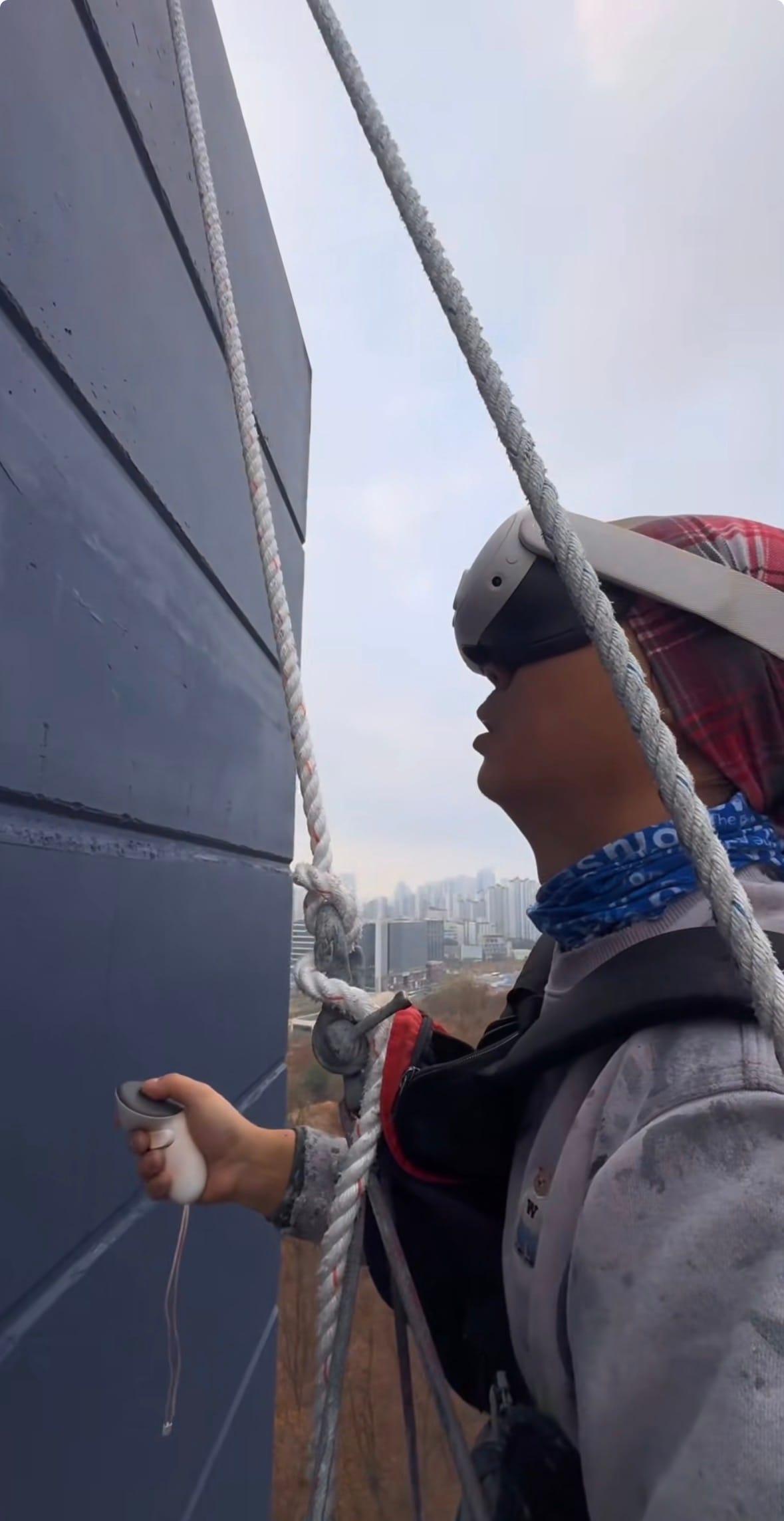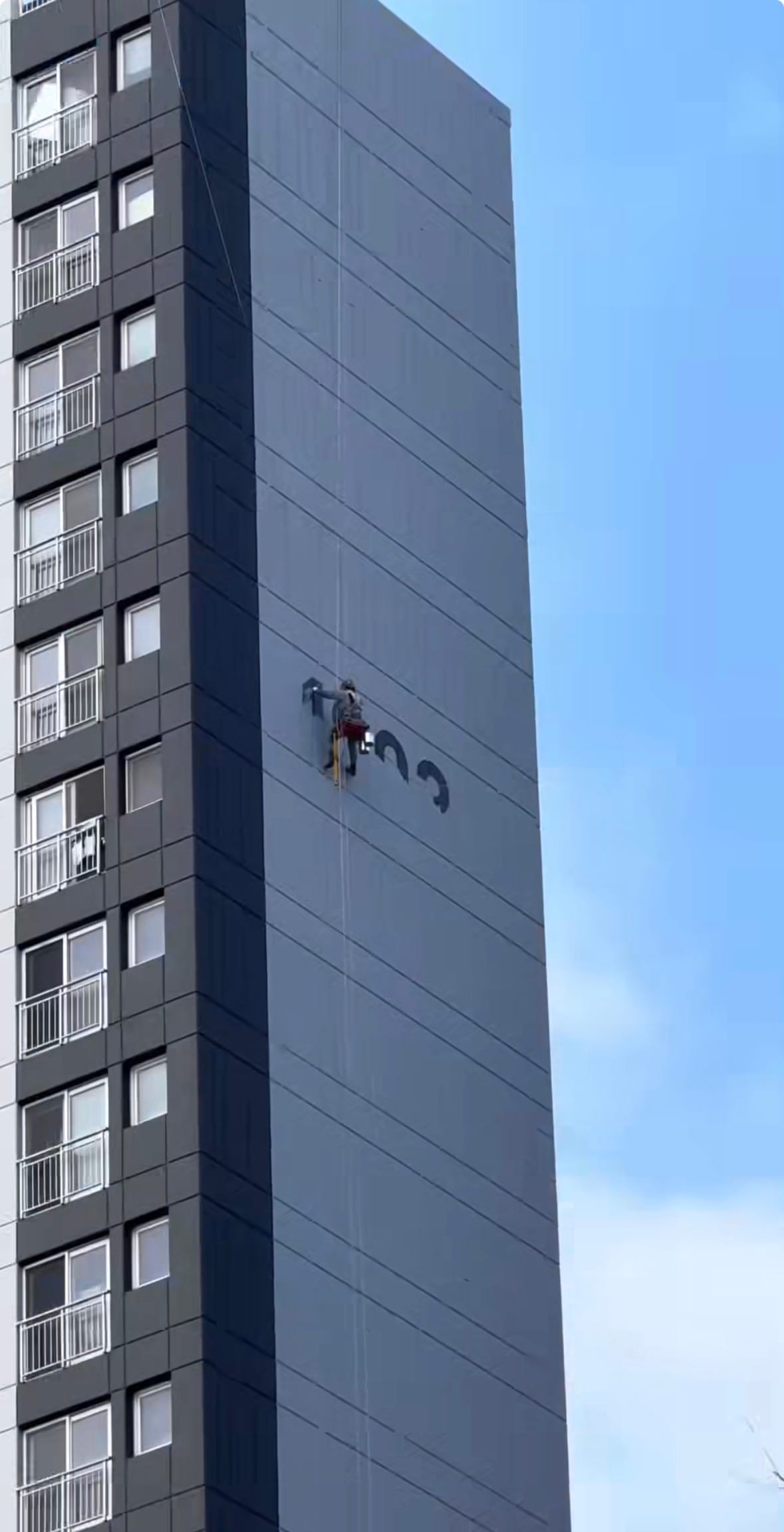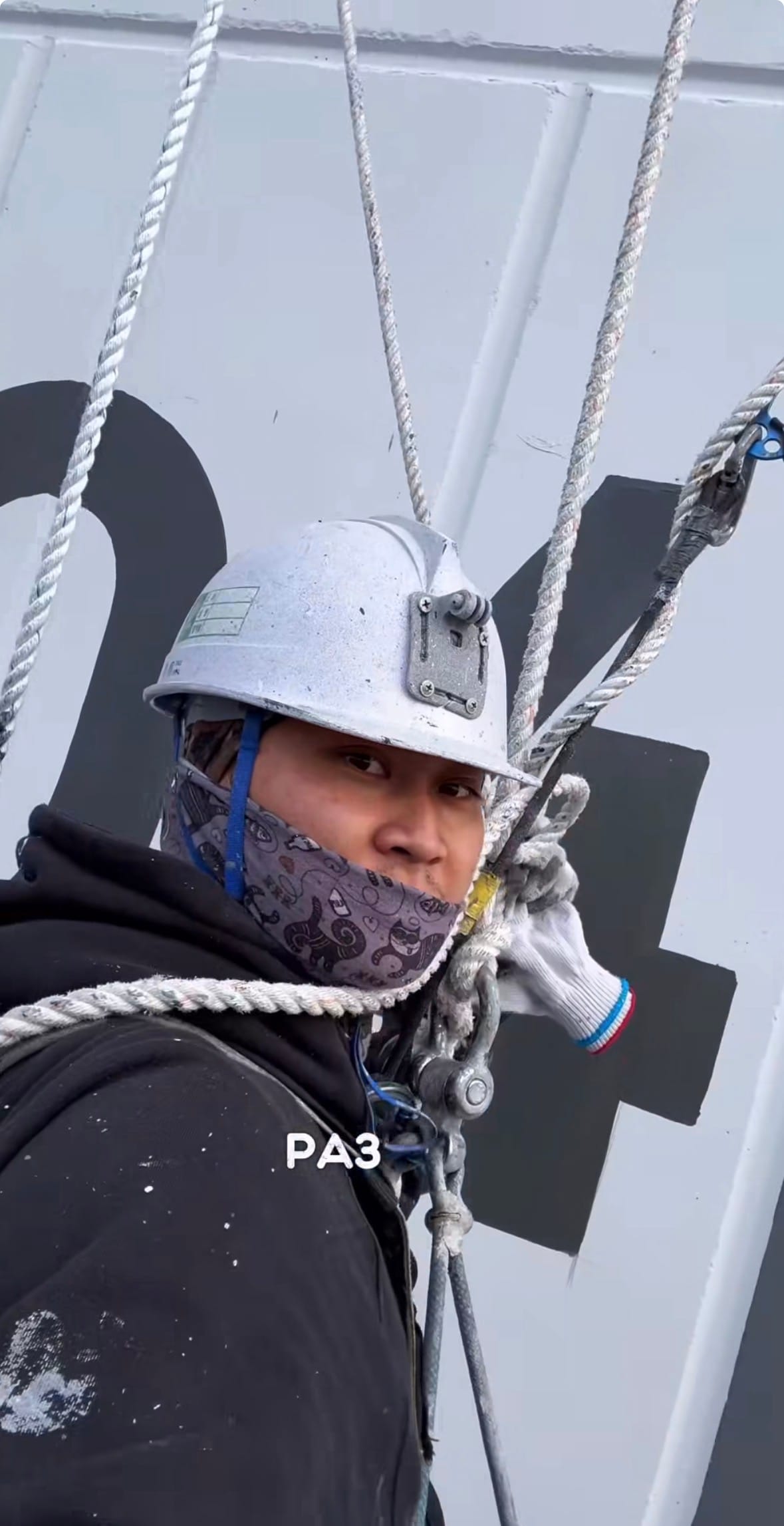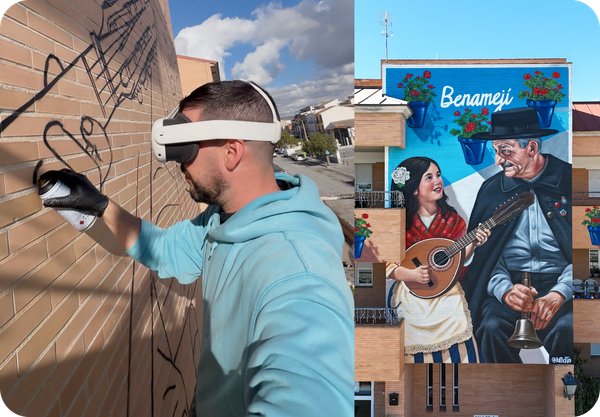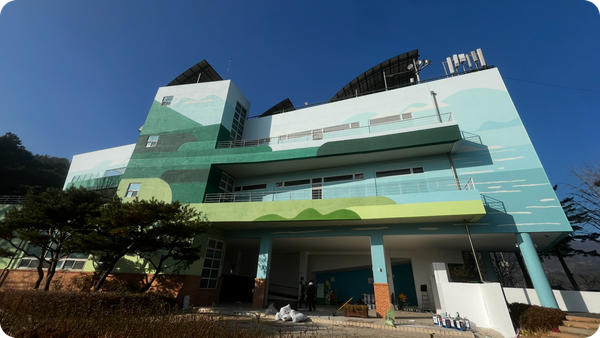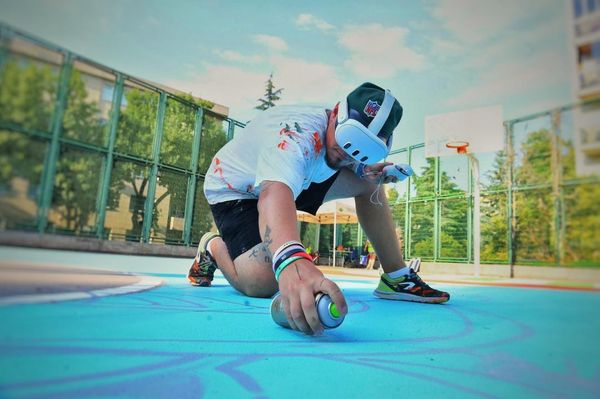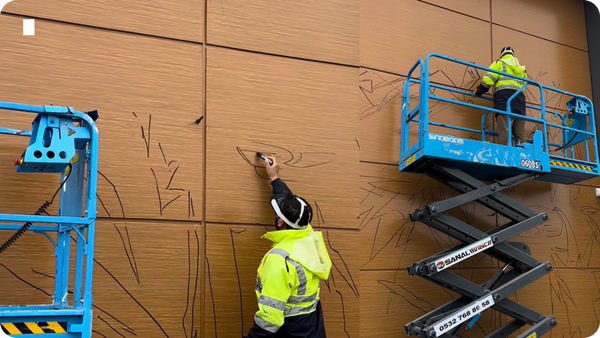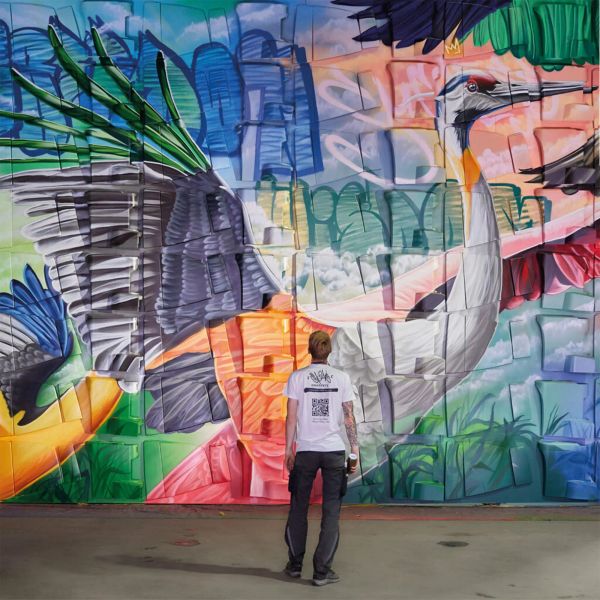
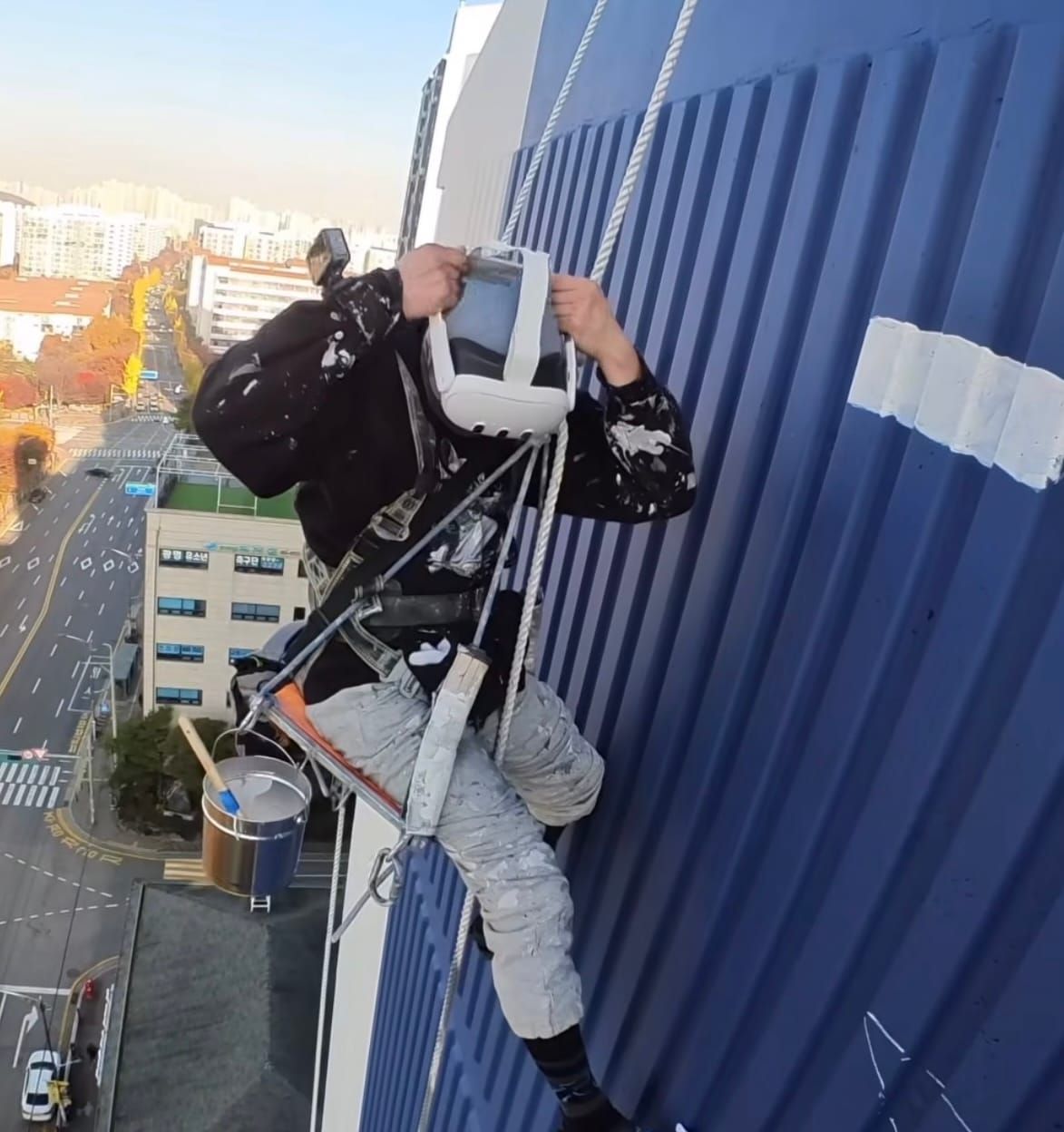
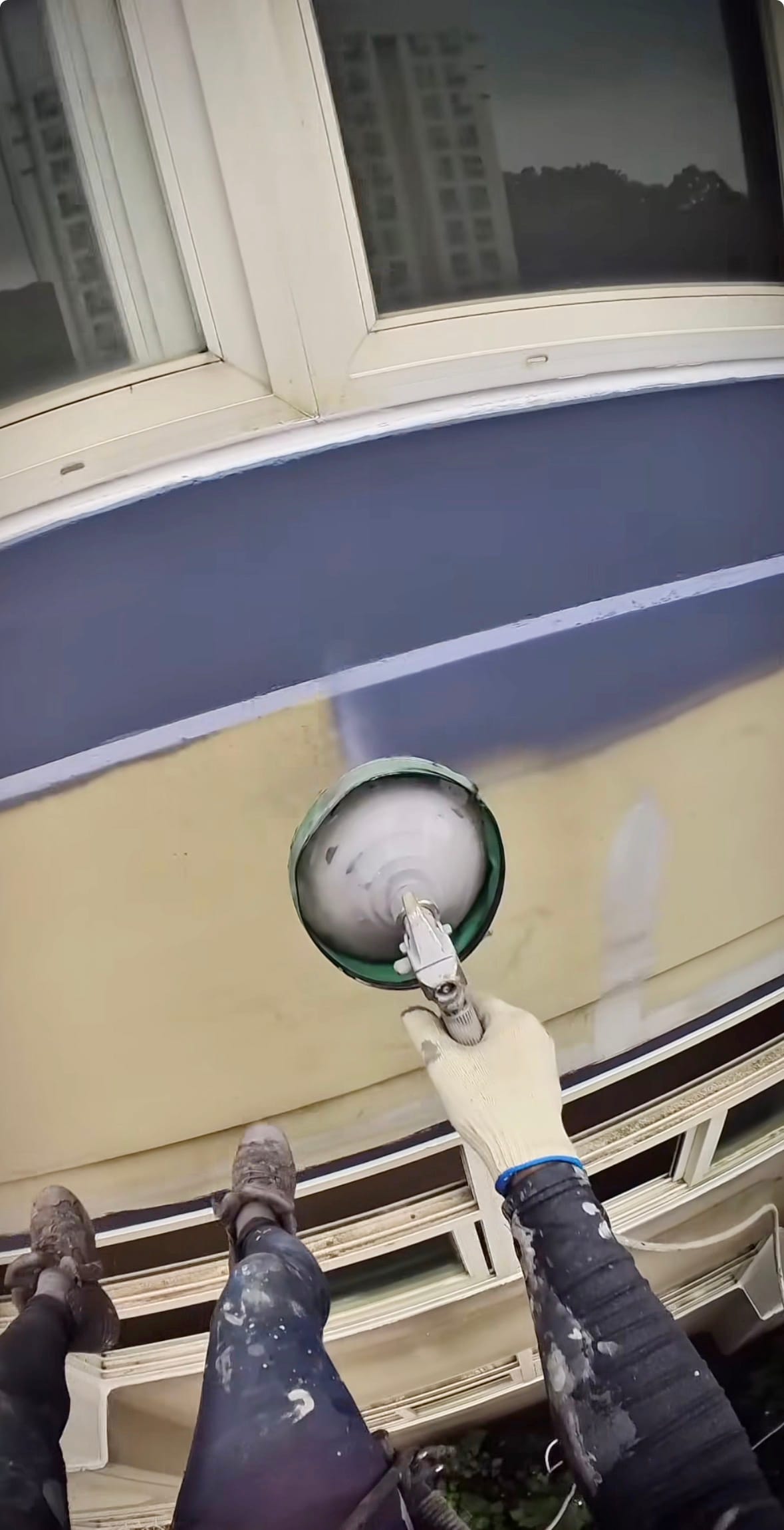
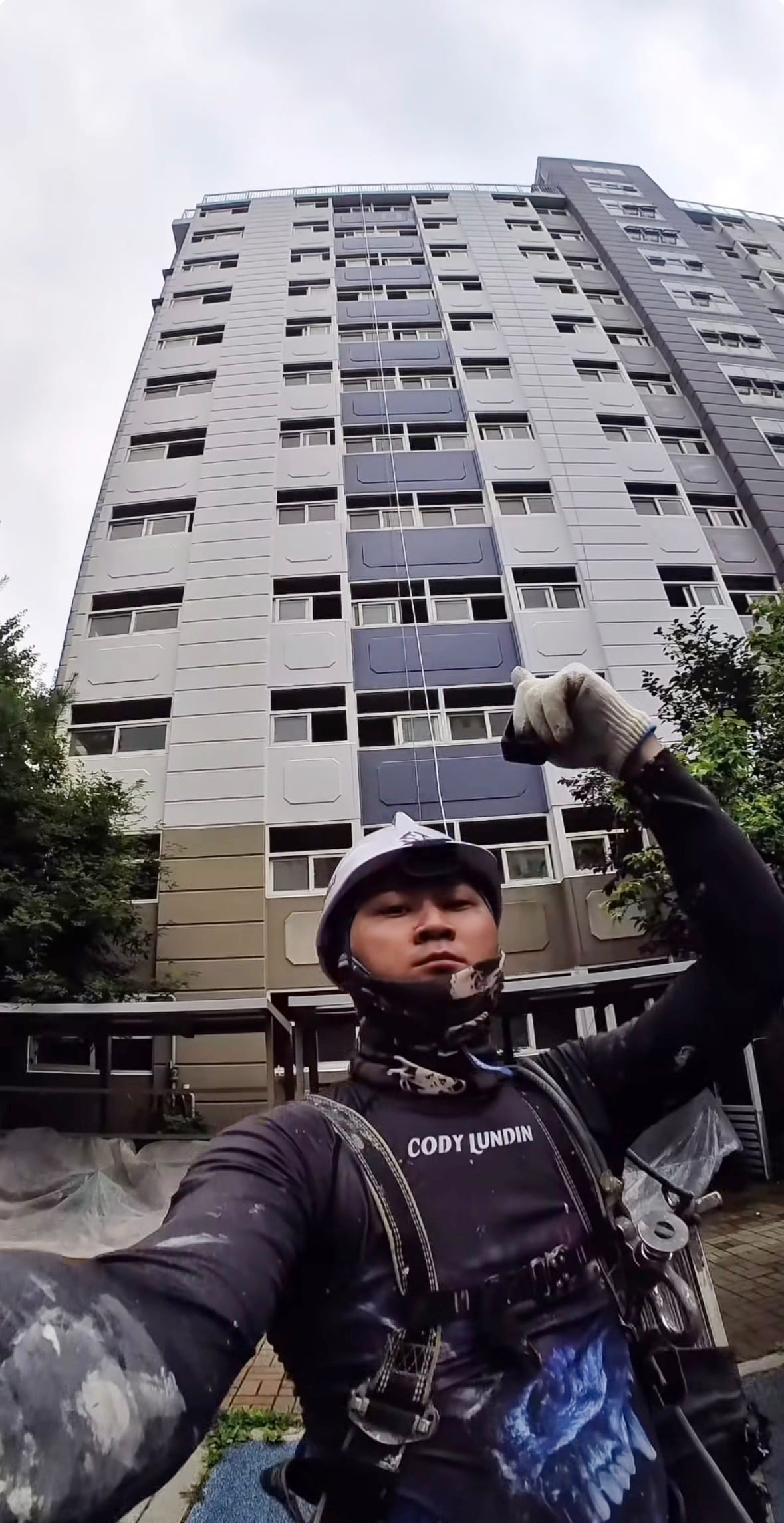
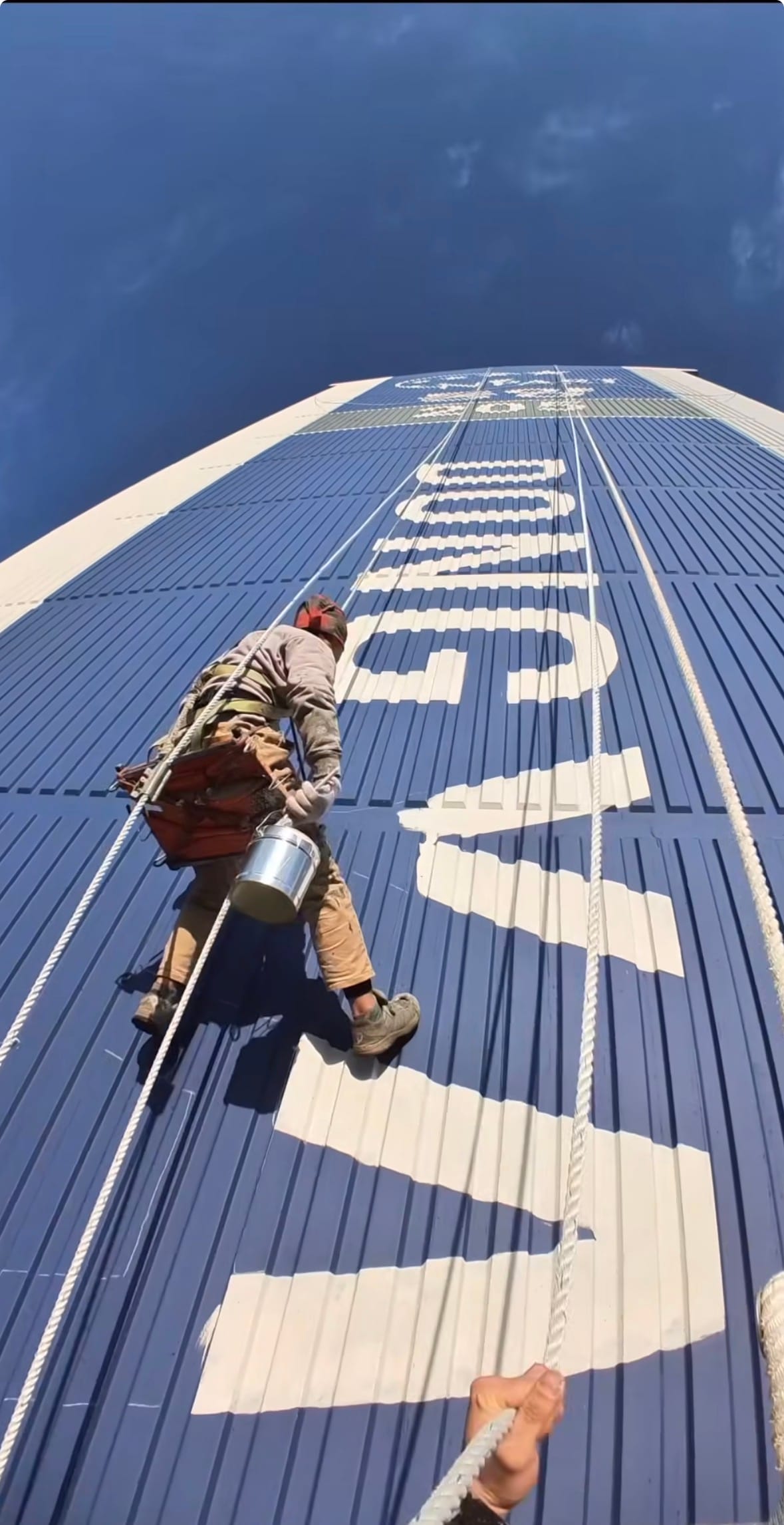
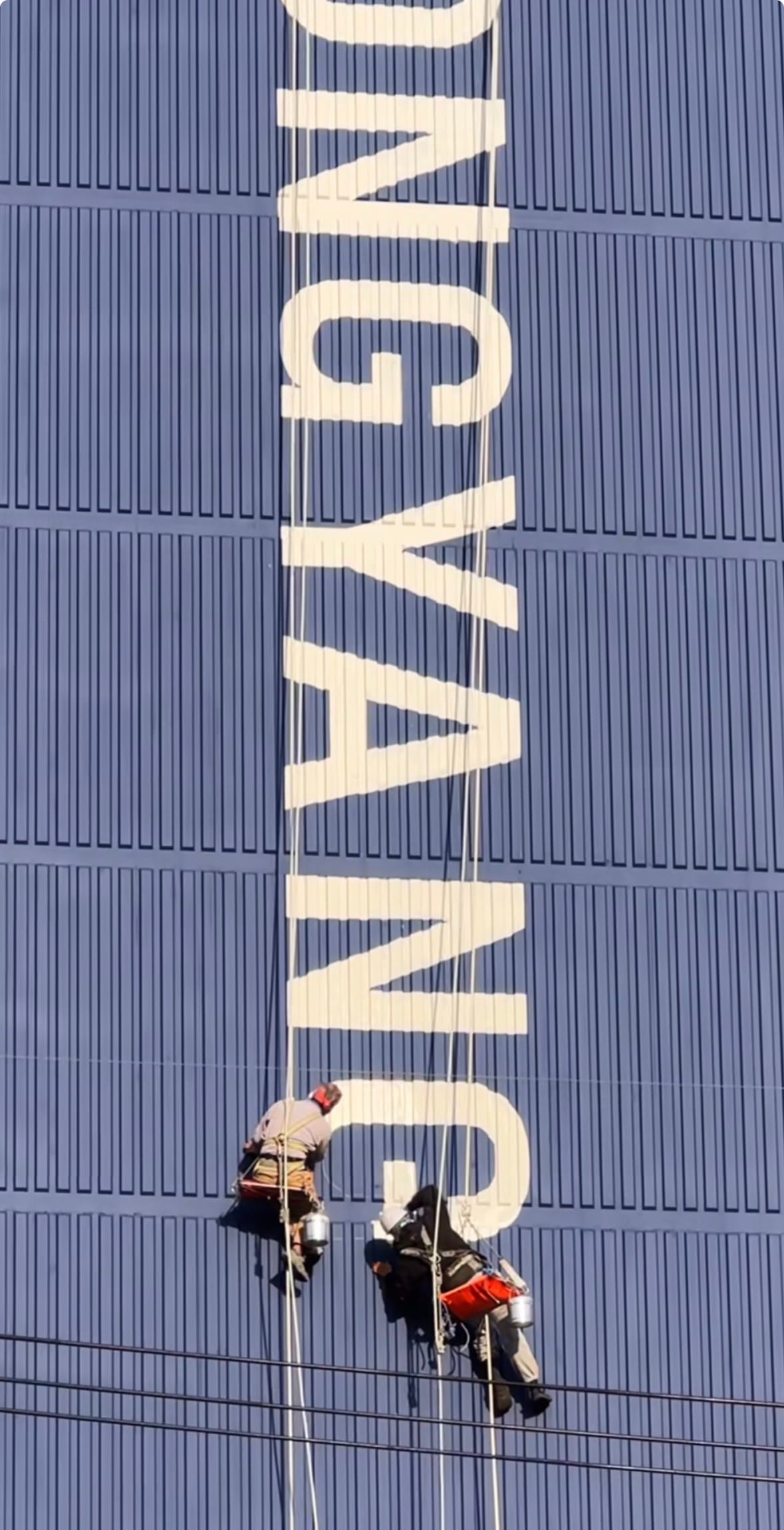
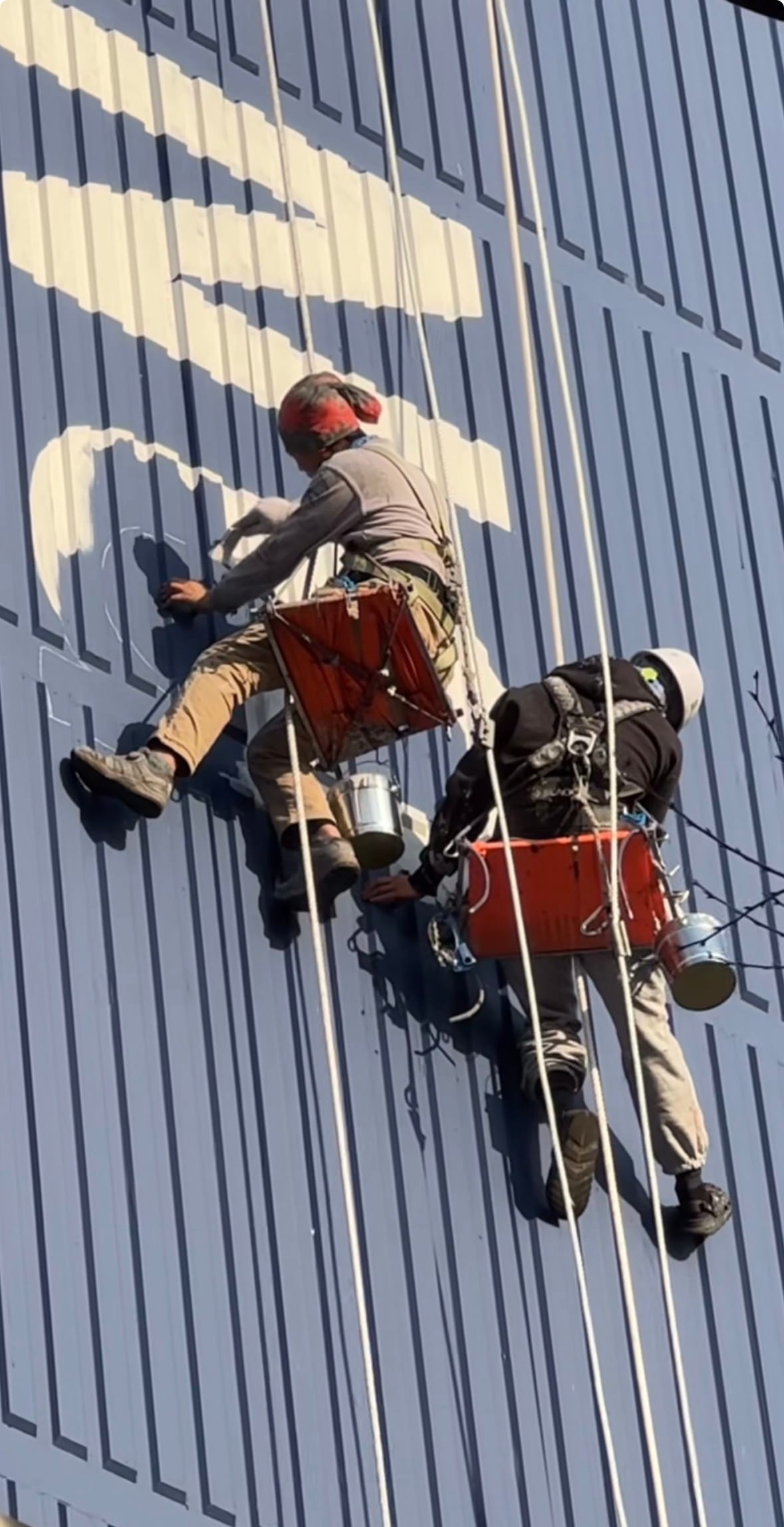
Unlike most creators in our series, Vlad Khegai (@paintichi) and his team aren’t traditional mural artists — they’re industrial painters working on high-rise buildings across Korea. Their daily tasks include facade repair, large-scale number painting, and applying logos or graphics on multi-story structures. Recently, Vlad’s team adopted VR headsets and the Sketchar app, unlocking unexpected advantages in a field where precision, speed, and safety are critical.
In this interview, Vlad explains how VR reshapes industrial painting workflows and why such technology may quietly become a new standard for large-format work.
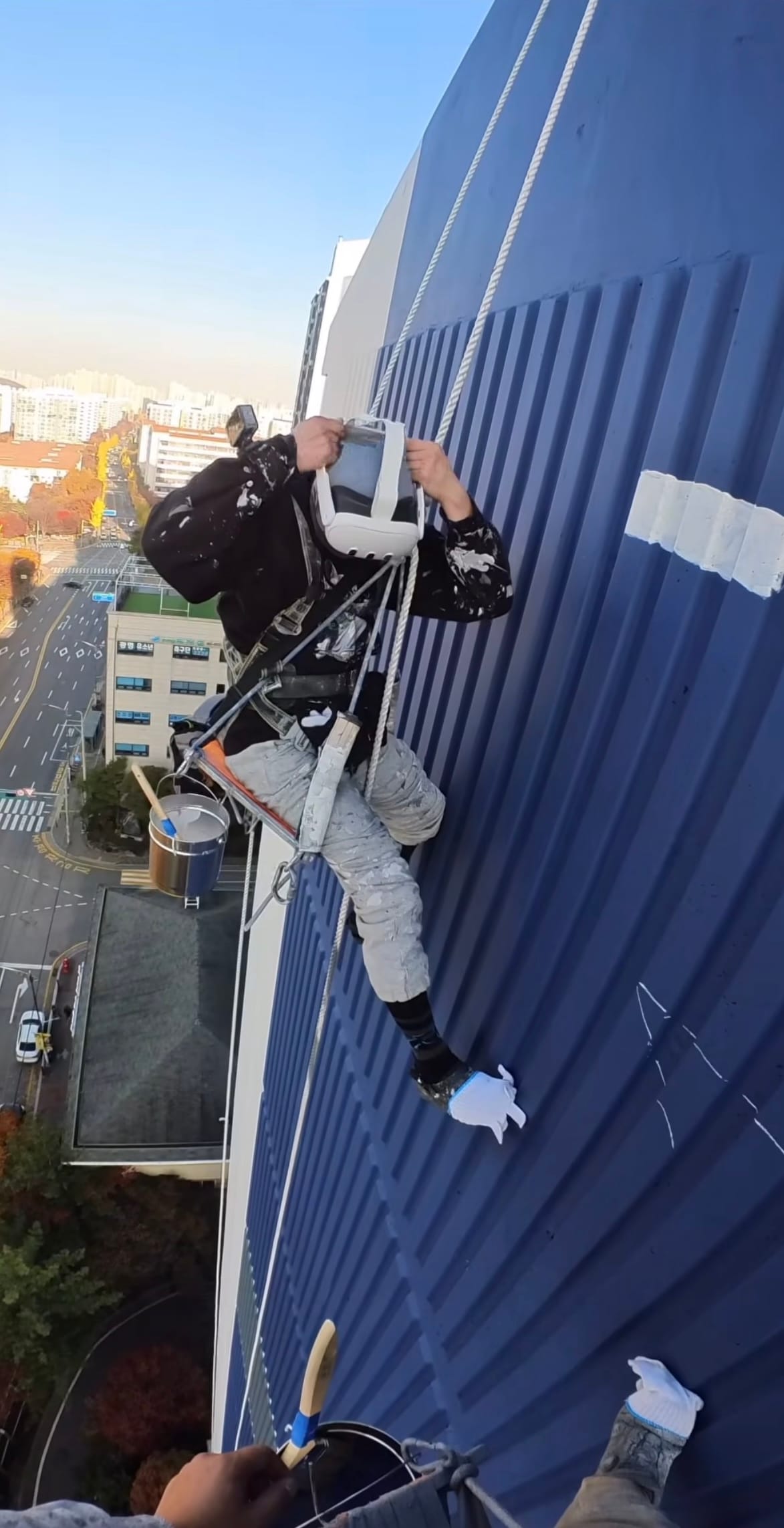
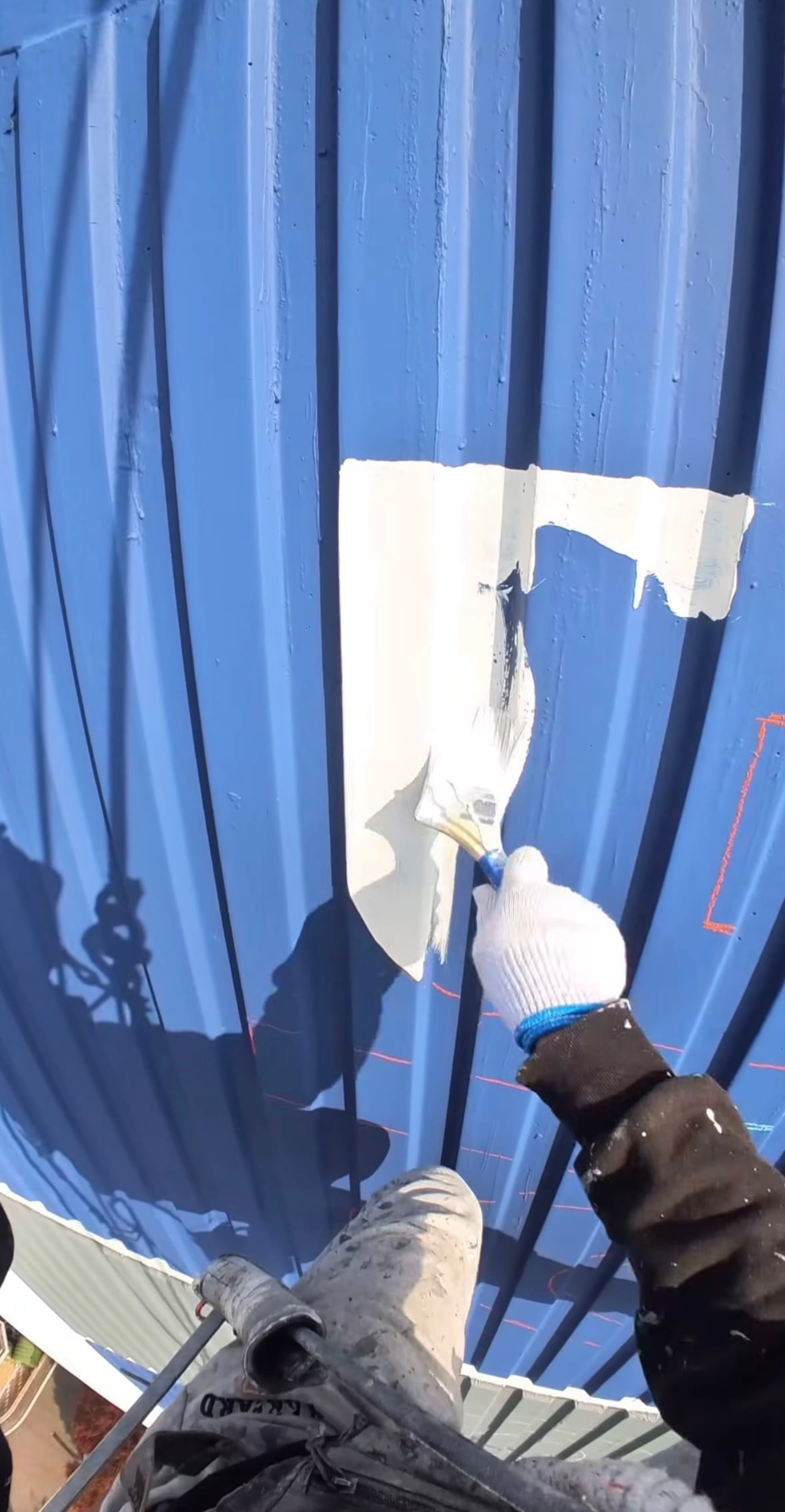
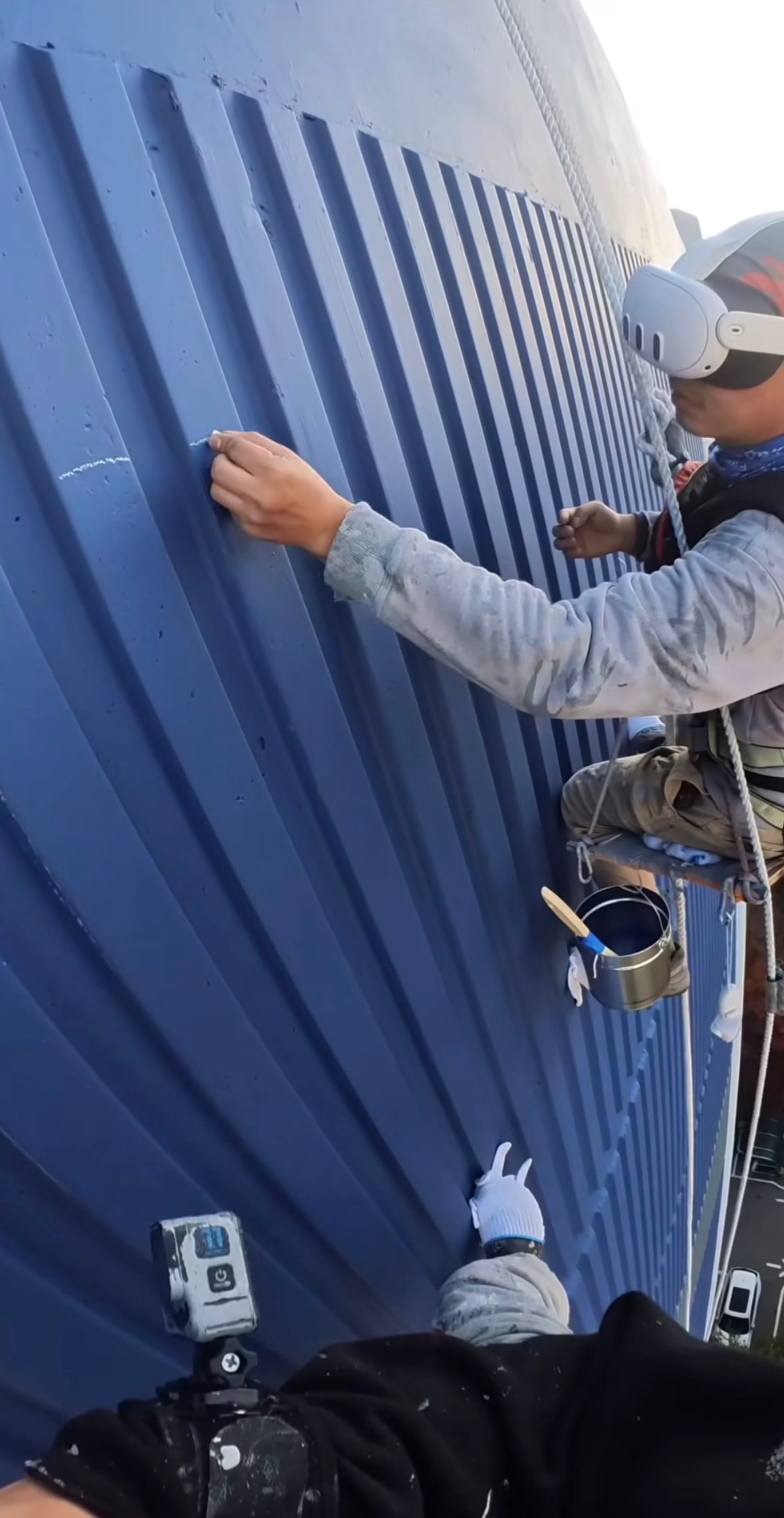
Video: Vlad Khegai Instagram
1. You and your team handle large-scale facade painting and high-rise graphics every day. How did your workflow change once you introduced VR and Sketchar into the process?
Vlad: If it weren’t for VR and the Sketchar app, we wouldn’t have started drawing on buildings at all. These tools added something new and interesting to our work. In Korea, there’s usually a strict division of labor — everyone performs only their own part — and drawing was never originally part of our tasks.
⸻
2. Industrial painting requires extreme accuracy when applying numbers, logos, or text on multi-story buildings. How does Sketchar in VR improve precision and help you avoid costly mistakes?
Vlad: At height, it’s difficult to immediately orient yourself: where to begin, what to anchor to, how to correctly place elements. Sketchar helps instantly determine the starting point and overall workflow. It’s a very useful tool that helps us develop new skills. And thanks to it, we’ve been getting noticeably more work.
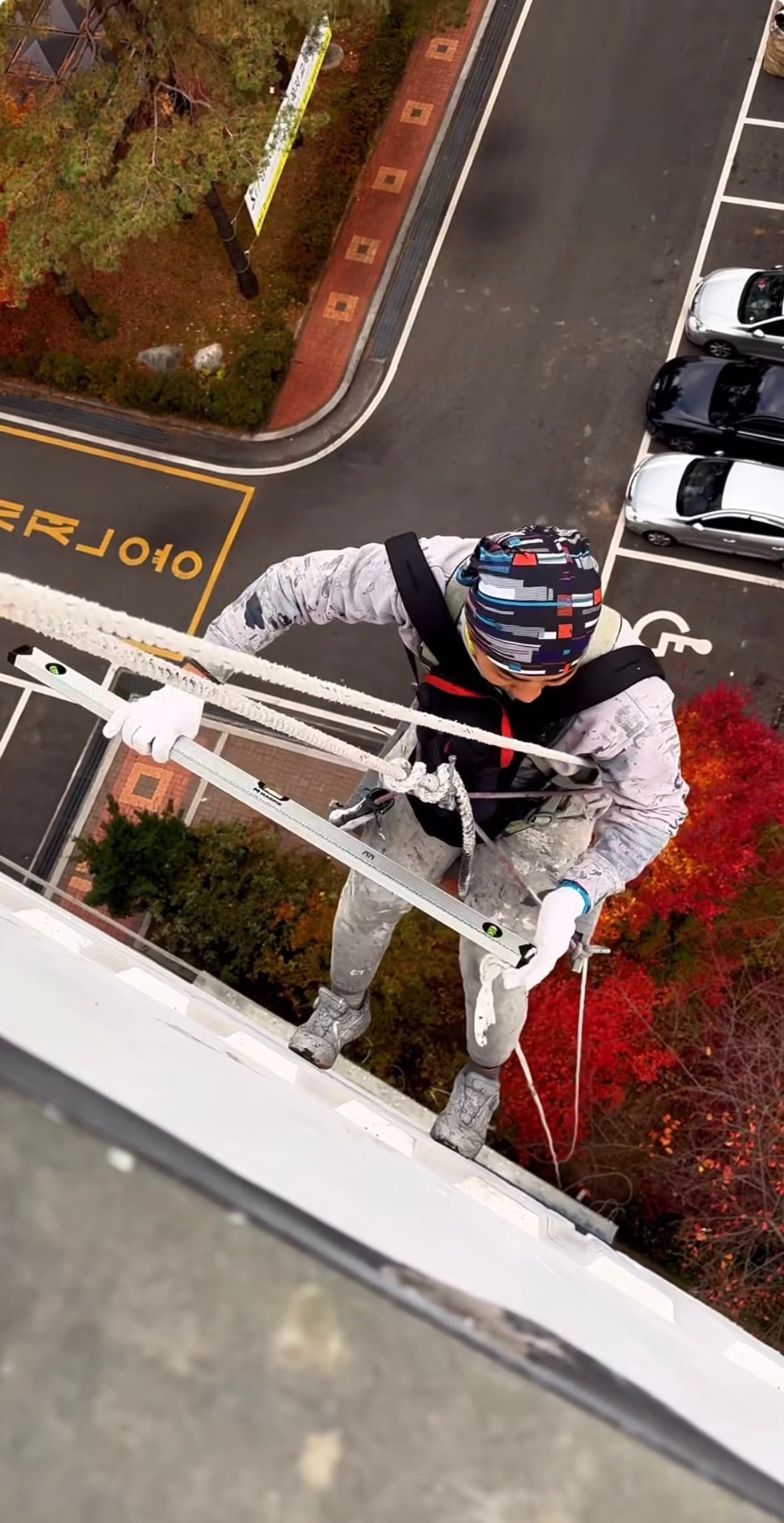
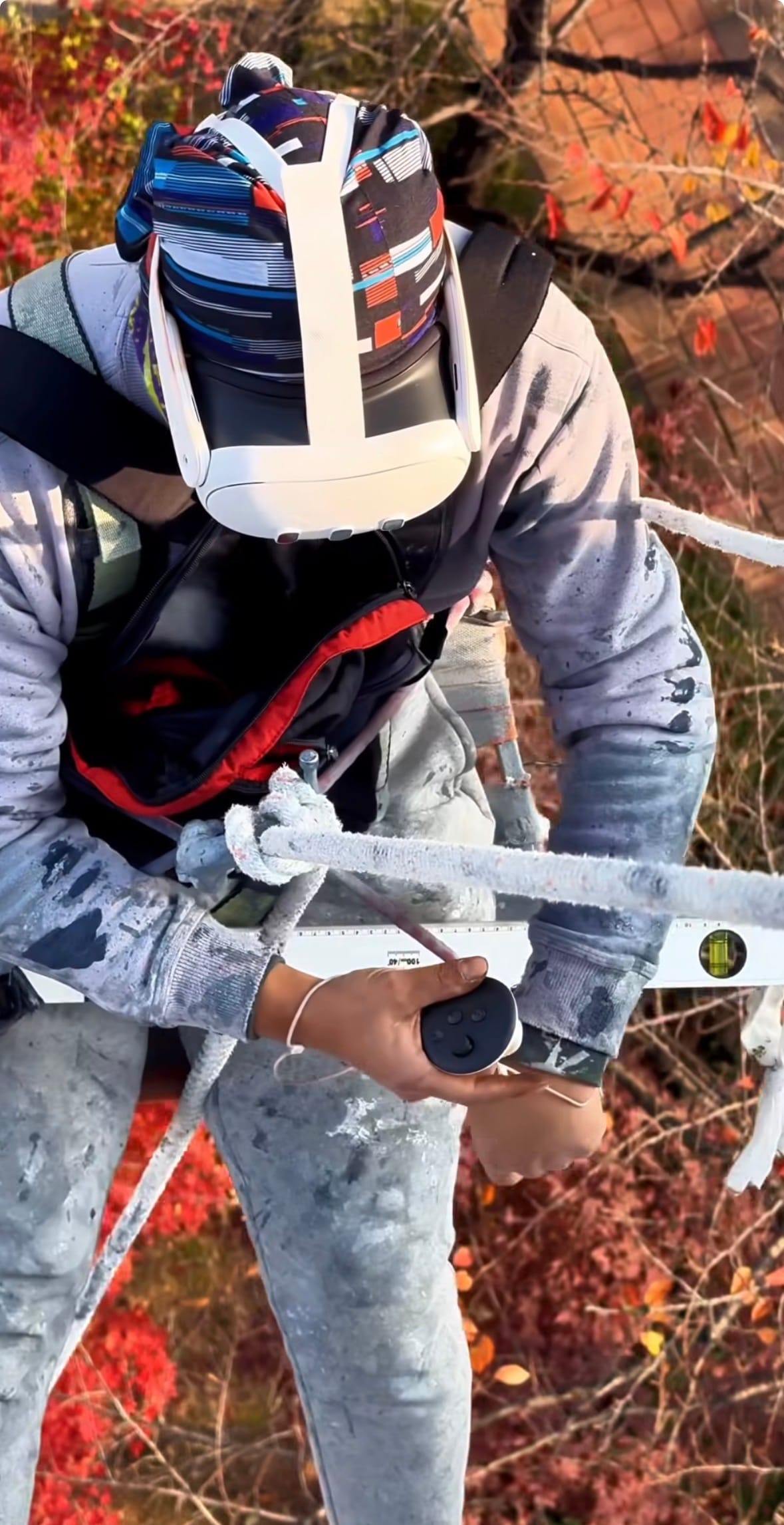
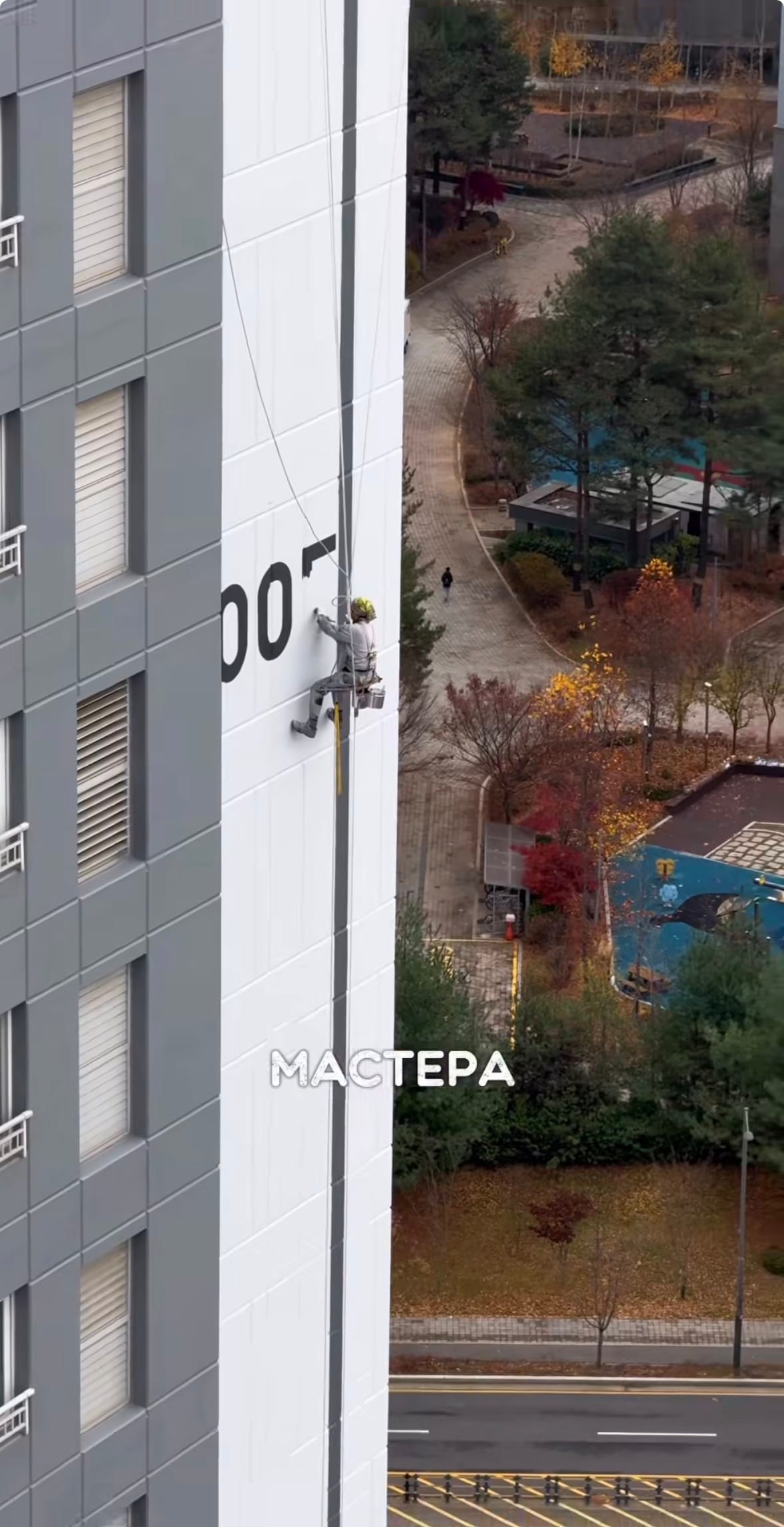
Video: Vlag Khegai, Instagram
3. Compared to traditional methods like projectors or manual measurements, how does VR affect safety, setup time, and logistics on construction sites?
Vlad: The only direct effect of VR is that you can’t wear a construction helmet on top of a VR headset.
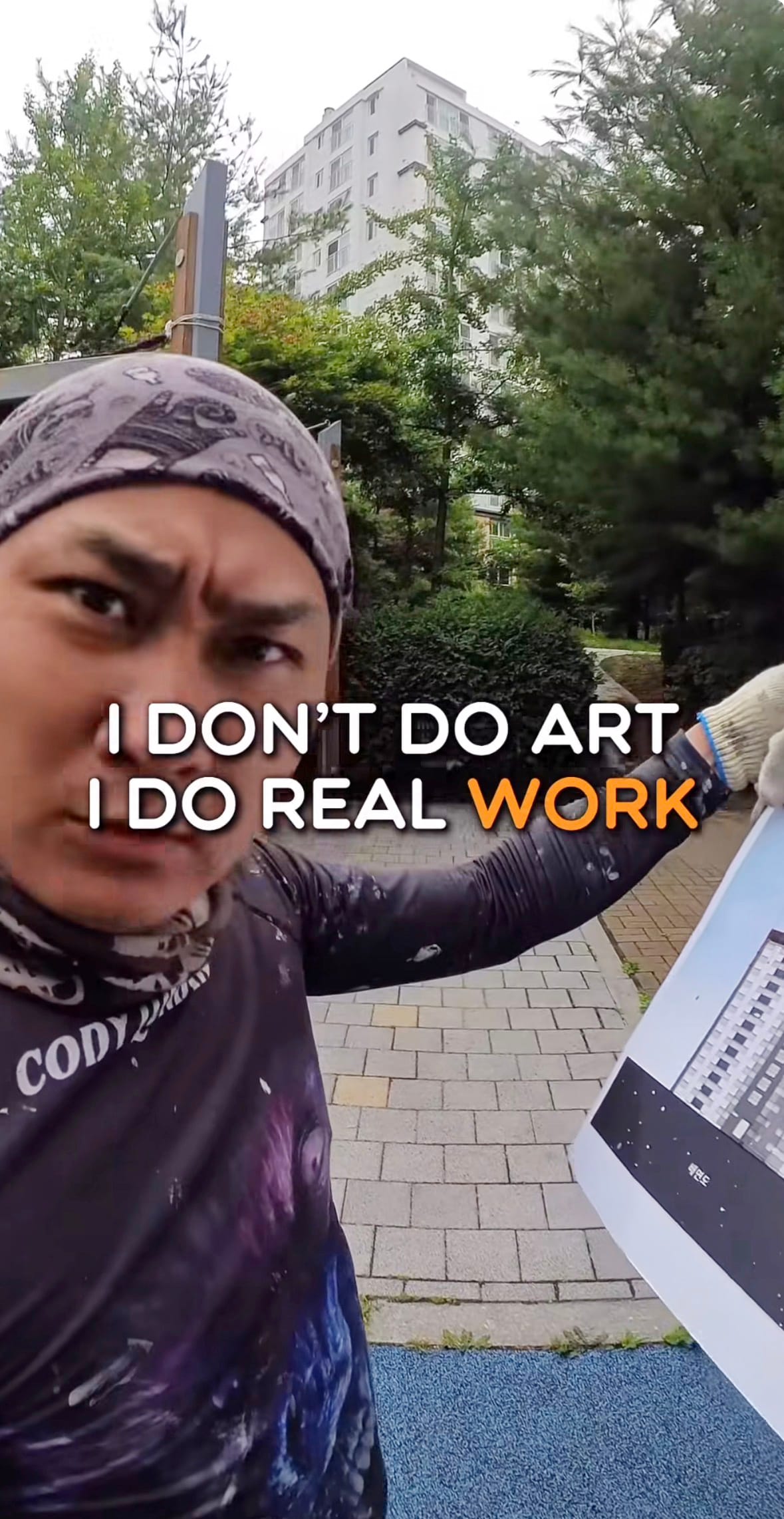
We don't do art, we do real work!
4. How does showing clients full-scale AR/VR previews of numbers or graphics on the actual building affect the approval process?
Vlad: It doesn’t affect the approval process. Clients bring us a ready-made visualization, and we simply transfer it onto the building.
Video: Vlad Khegai Instagram
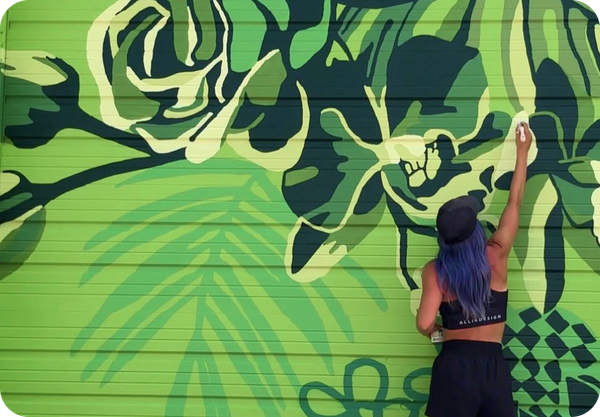
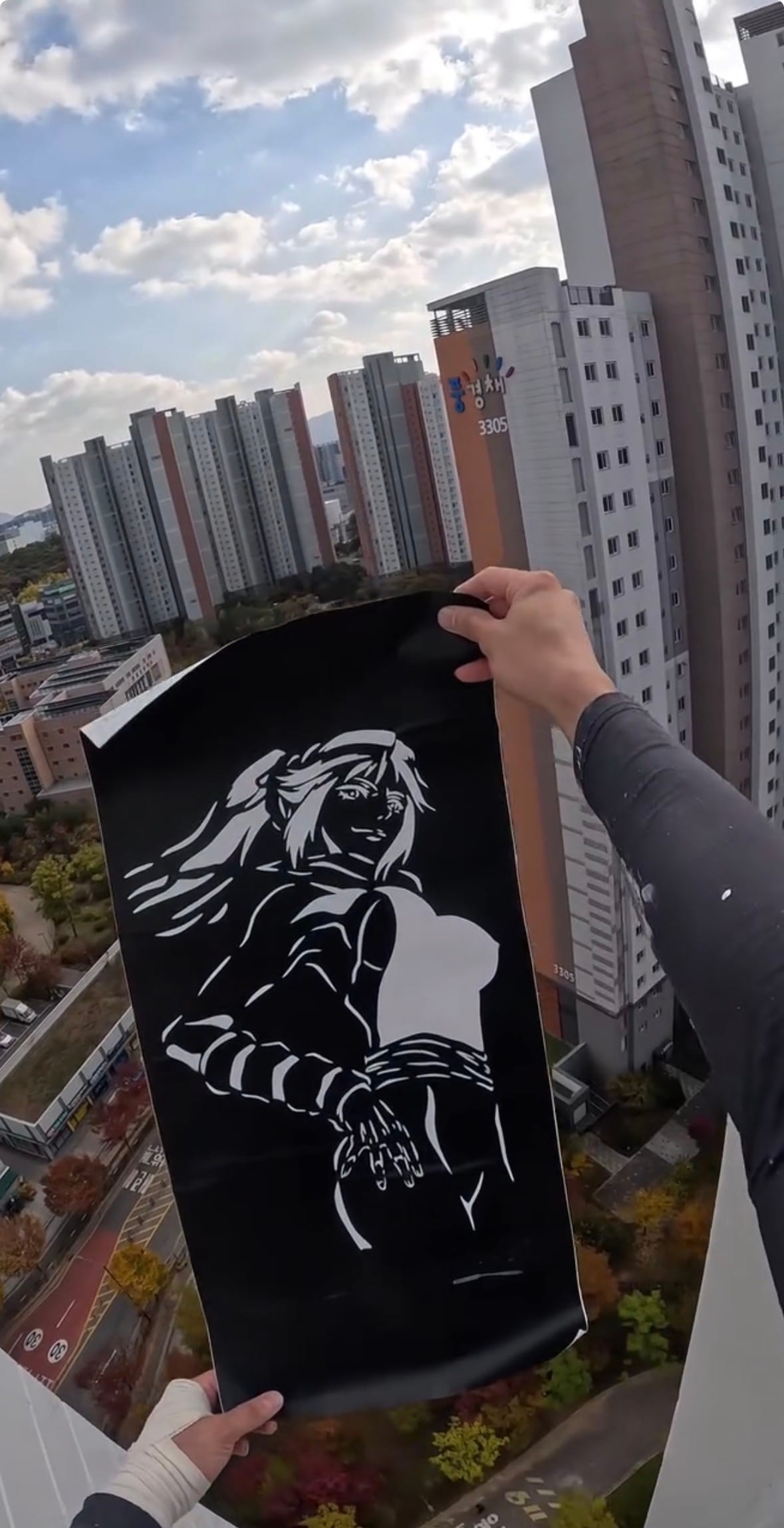
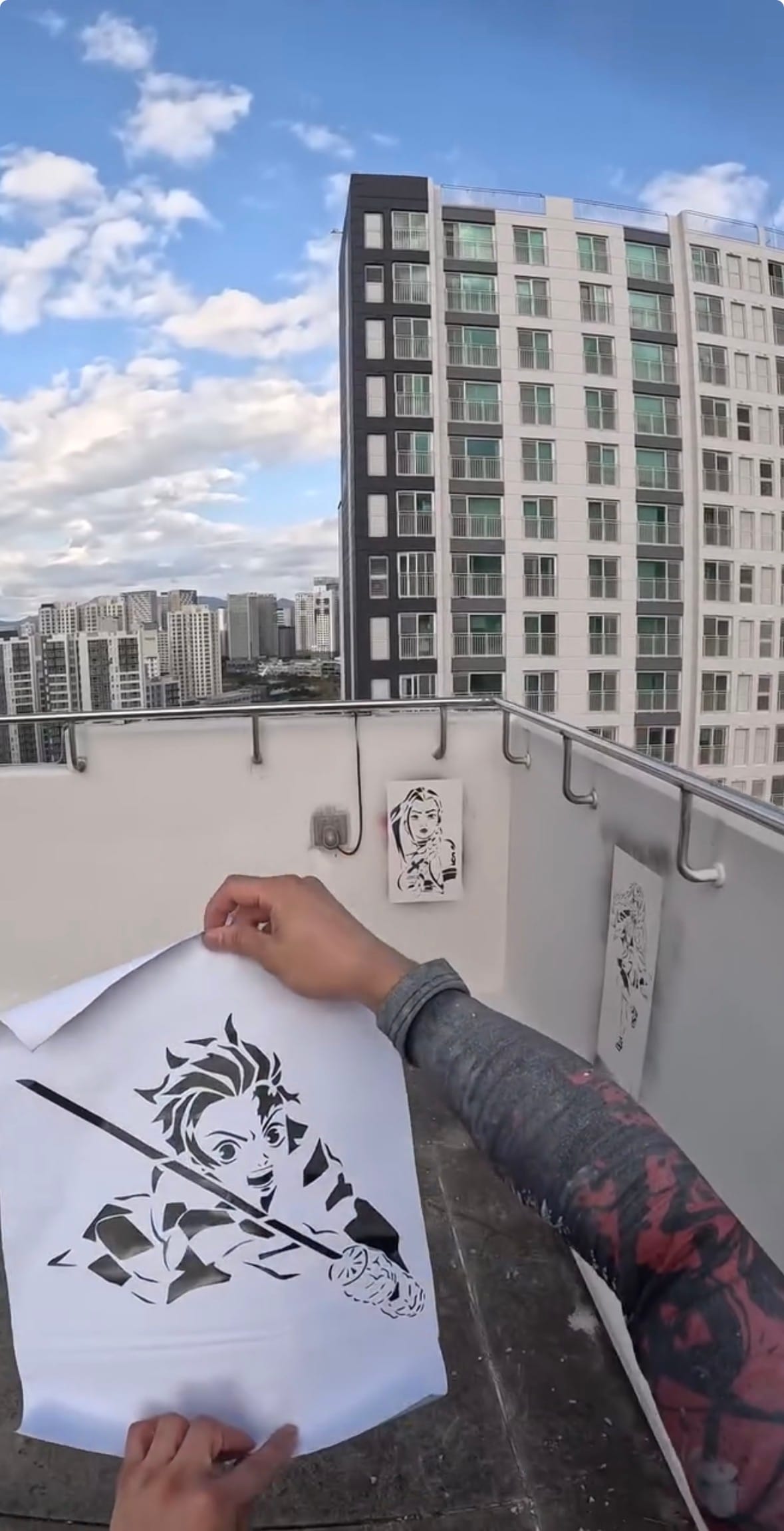
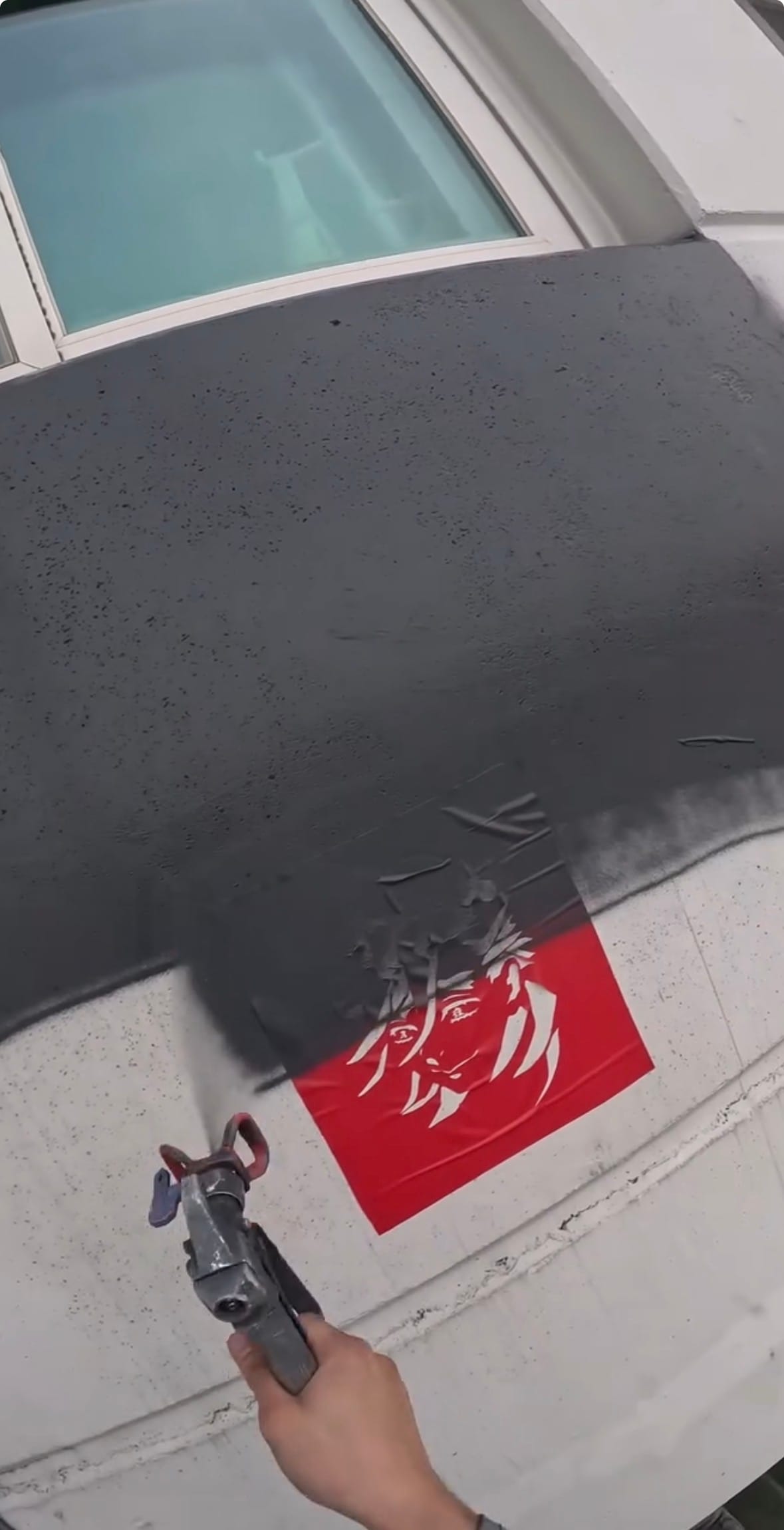
5. In one of your videos, you mentioned you “don’t do art — you do hard work,” but we’ve also seen you create anime stencils. That’s art too. Have you considered using Sketchar to grow an artistic career?
Vlad: Stencil drawing was just an experiment for my TikTok. That format didn’t perform well, and I don’t have time to develop it further right now. Maybe later;)
⸻
Vlad’s experience offers a surprising look at how VR and AR aren’t just rewriting the rules for mural artists — they’re quietly transforming industrial painting as well. For teams working at scale, tools like Sketchar reduce guesswork, eliminate orientation errors, and streamline workflows that used to depend heavily on manual measurement.
While VR may not solve every logistical challenge on construction sites, it already proves invaluable in improving precision and expanding what traditional industrial crews can deliver. As VR adoption grows, industries far beyond art may discover the same unexpected efficiencies.
▋
Download Sketchar on Meta Quest
Subscribe Vlad Khegai on Instagram