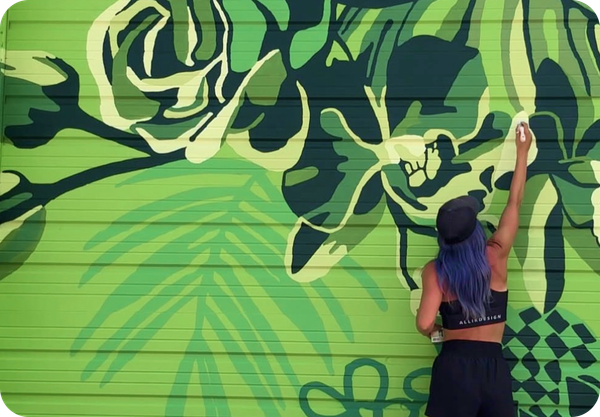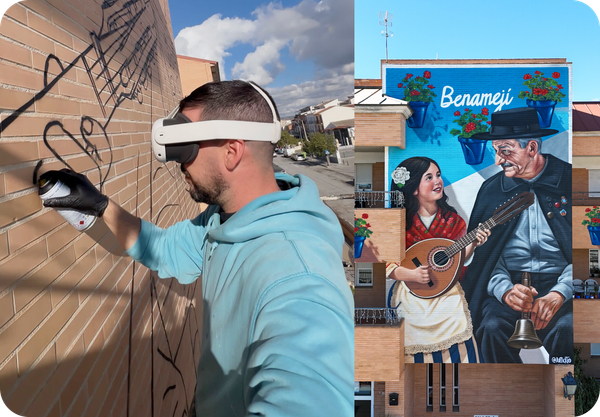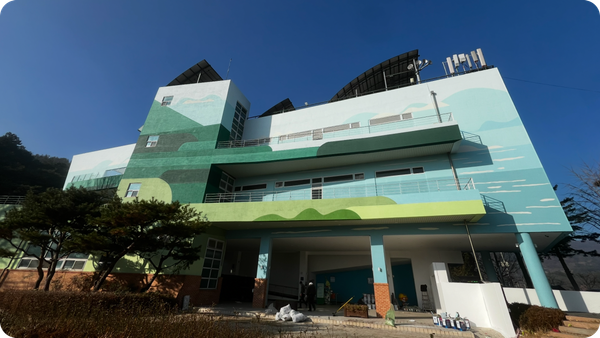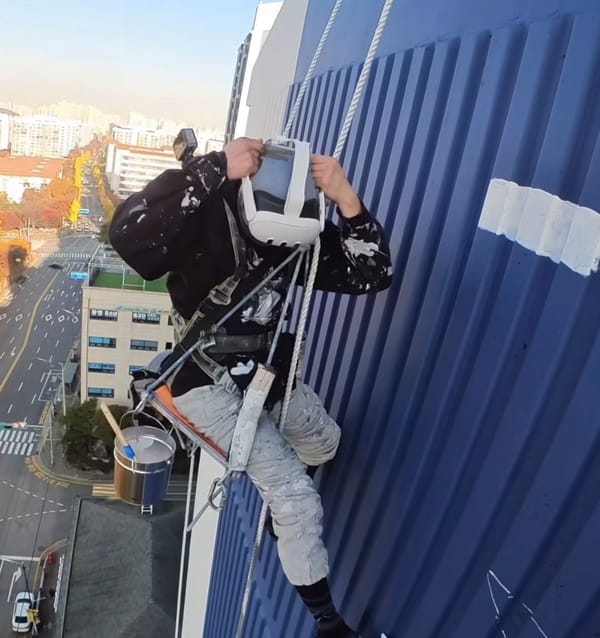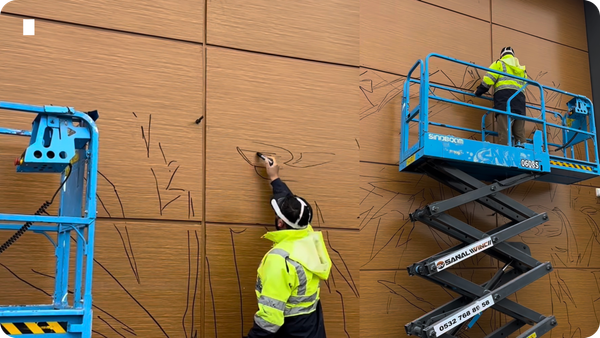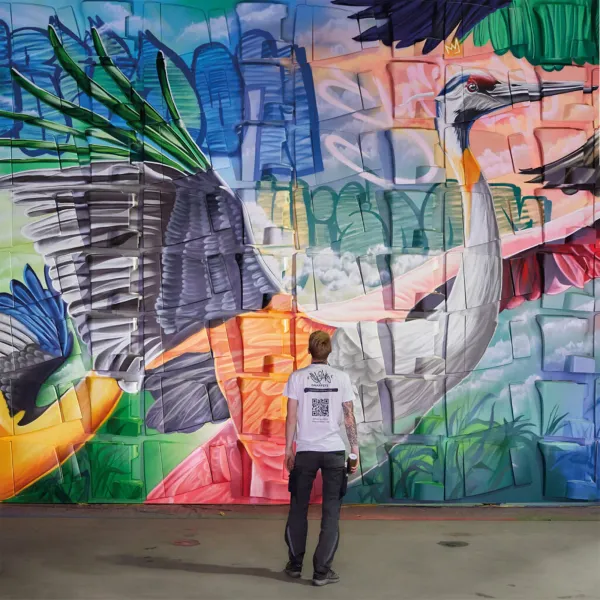
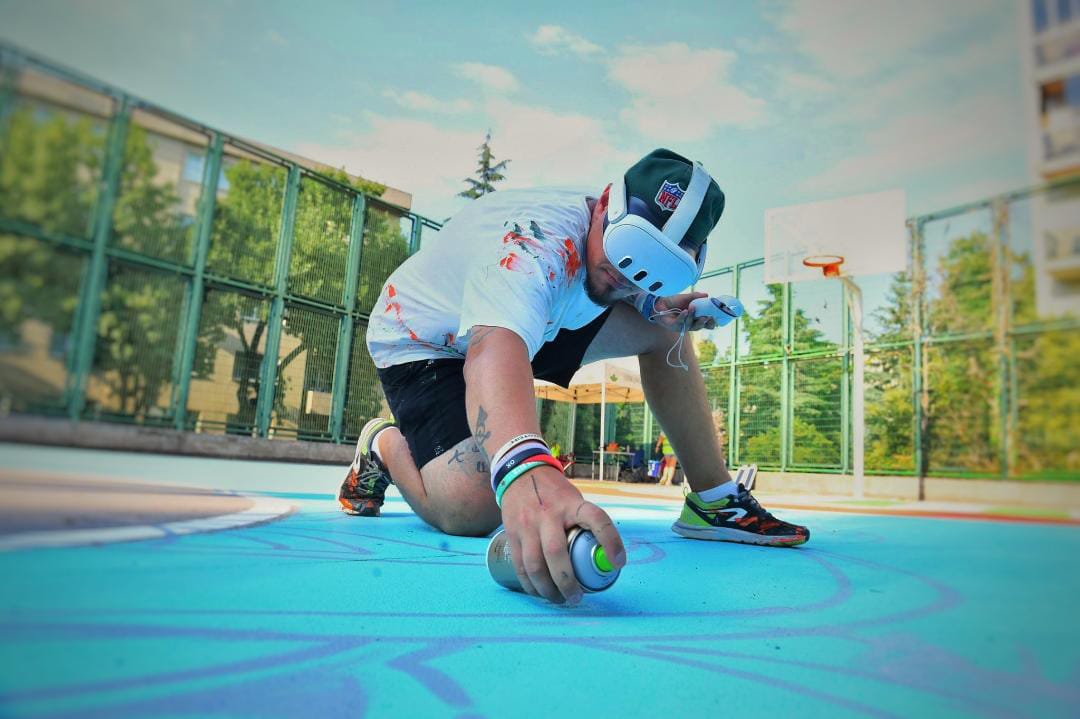
Painting a mural on the ground is nothing like painting on a wall. There’s no vertical projection, no comfortable angle, no easy way to judge proportions across 400 square meters of concrete. For most artists, the limitations alone would be enough to avoid horizontal surfaces entirely.
But not for Dukstill — one of Turkey’s early adopters of AR and VR tools for mural art. Known for transforming basketball courts into vivid, geometric playgrounds, Dukstill has pushed Sketchar and Meta Quest far beyond their original use cases, adapting the technology to the realities of large-scale ground painting.
In this interview, he breaks down how Sketchar helps him capture scale, control perspective, work faster, collaborate better, and unlock creative precision that was previously impossible on horizontal surfaces. More importantly, he shows how technology isn’t replacing art — it’s expanding what artists are capable of.
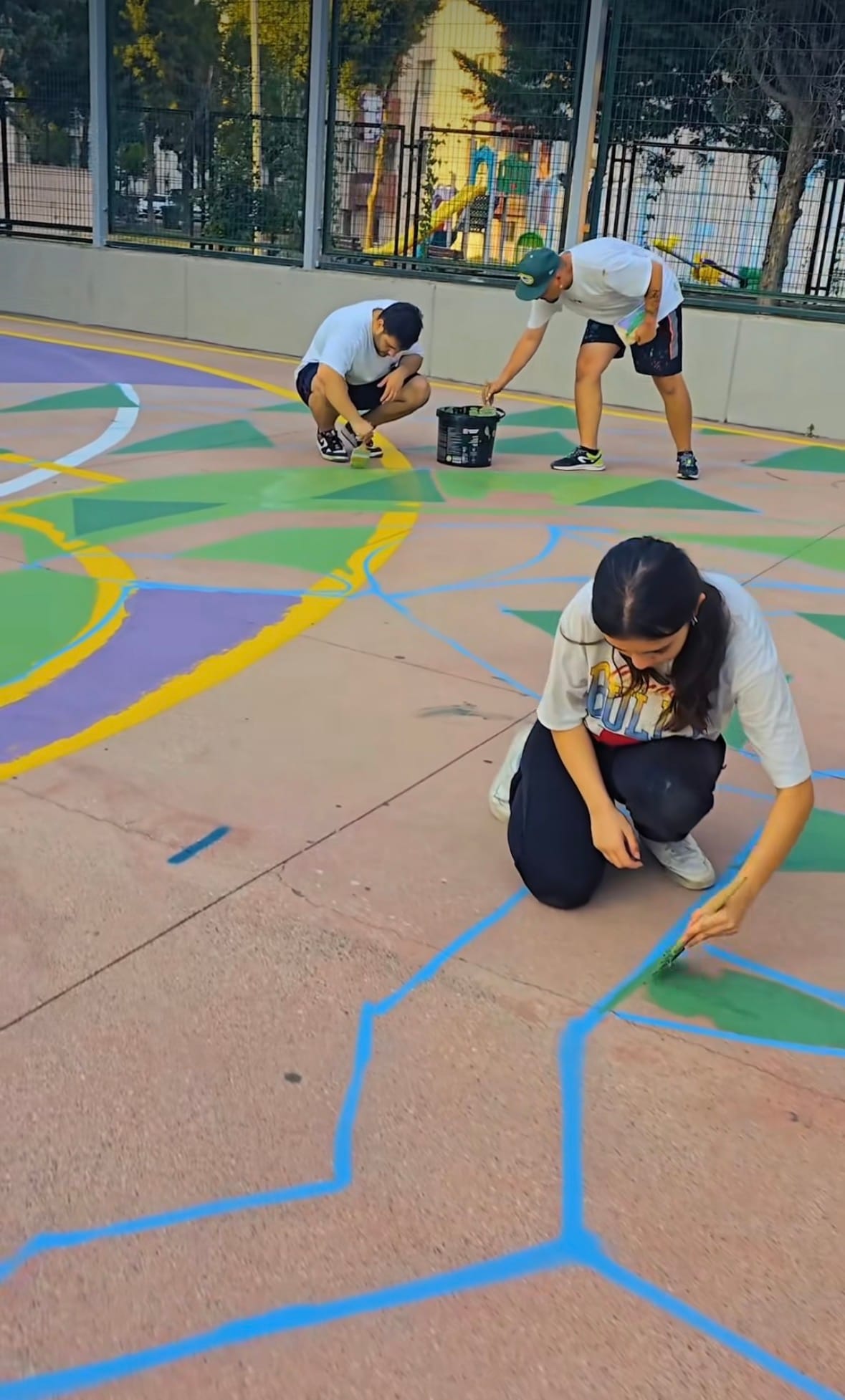
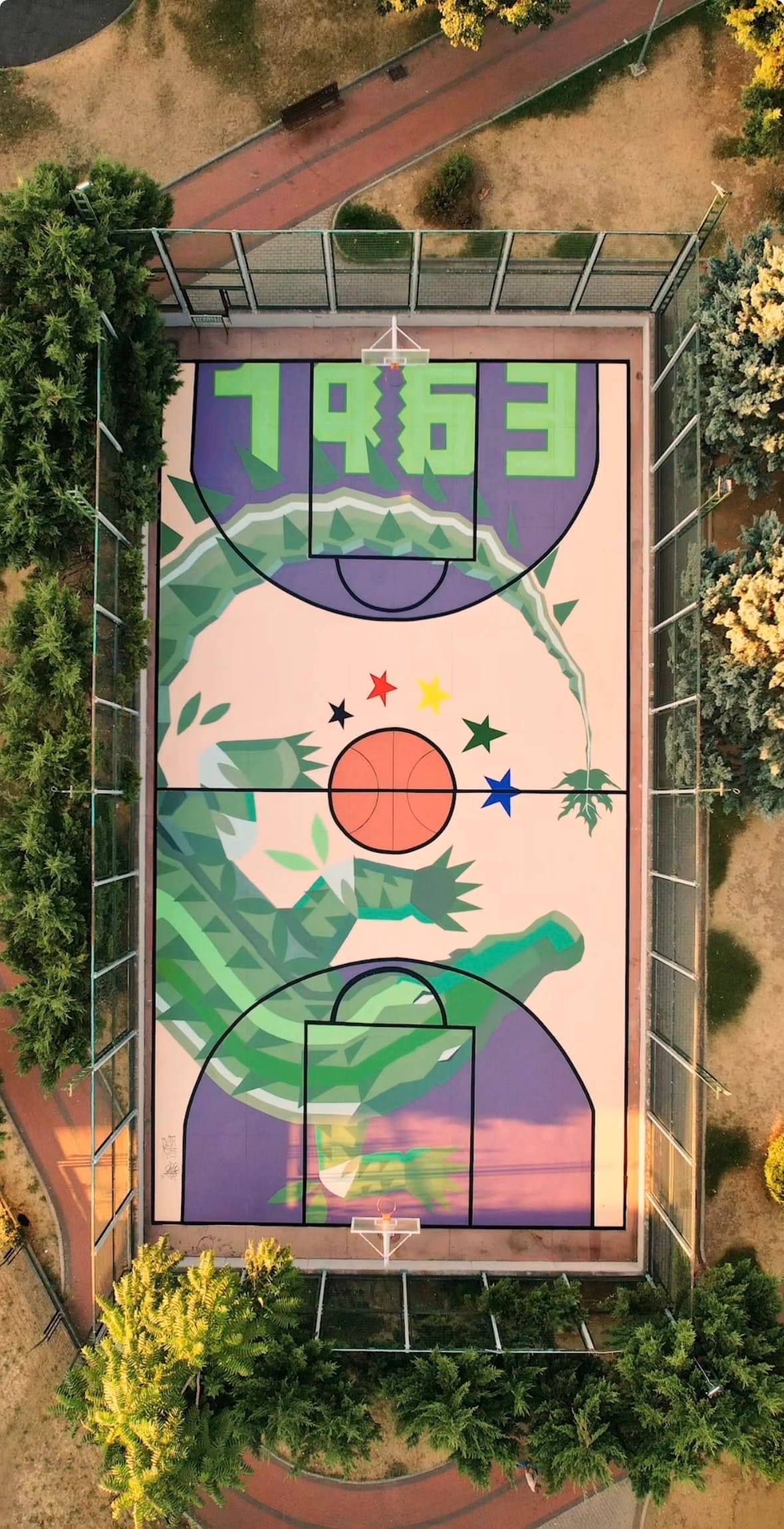
Video: Dukstill's Instagram
1. Ground murals come with unique limitations — especially the fact that you can’t use projectors on horizontal surfaces. What made you explore AR/VR tools like Sketchar as an alternative?
Dukstill: For years, I worked with projectors, but this method reaches its limits on ground murals. Since you can’t project onto a horizontal surface, transferring the sketch became both difficult and unnecessarily expensive.
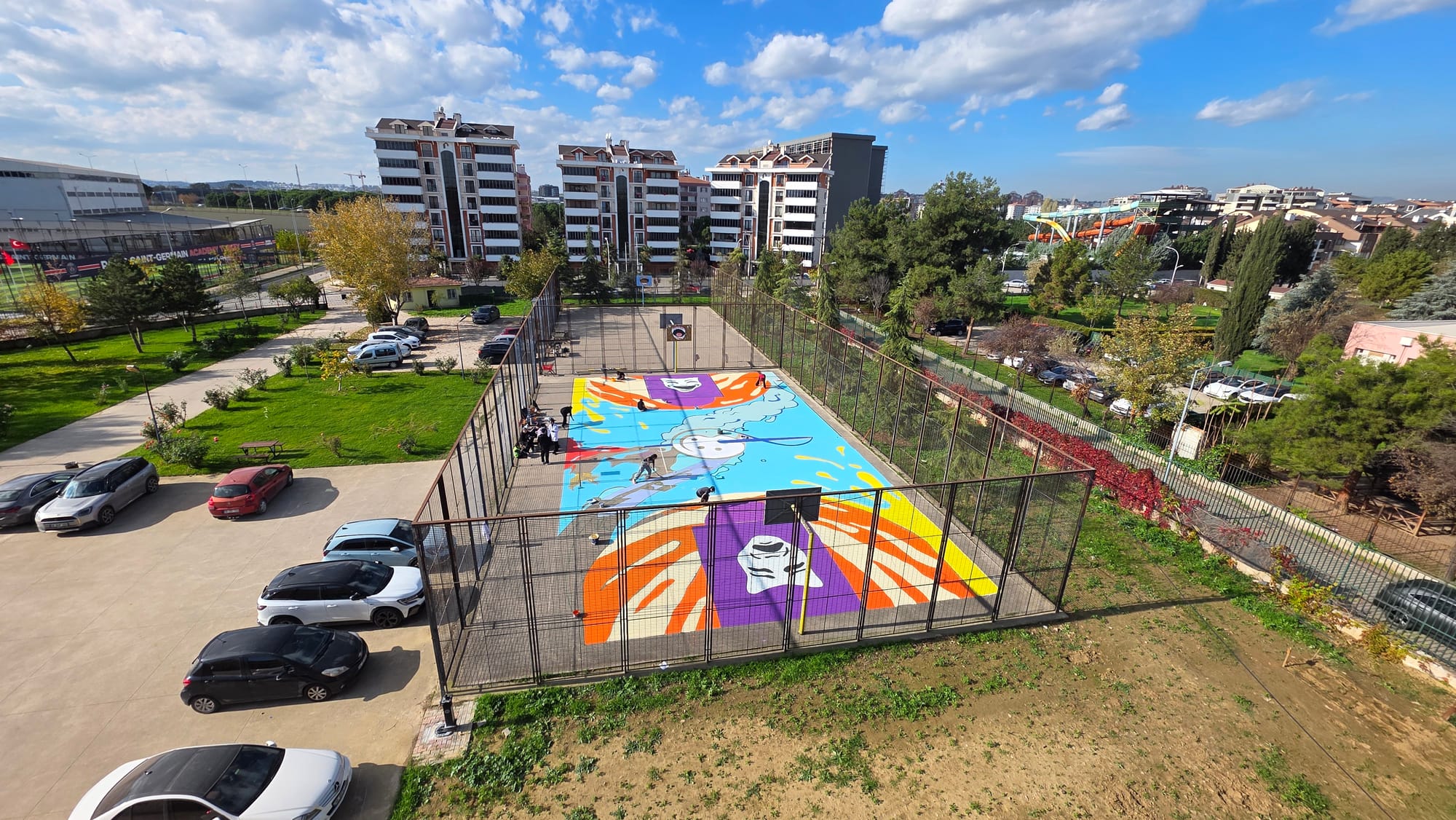
When I first tried Sketchar, the app was mostly designed for vertical use, but I pushed its boundaries on a 28-by-15-meter surface. Naturally, I faced some challenges at first — controlling such a huge area in VR is an experience in itself.
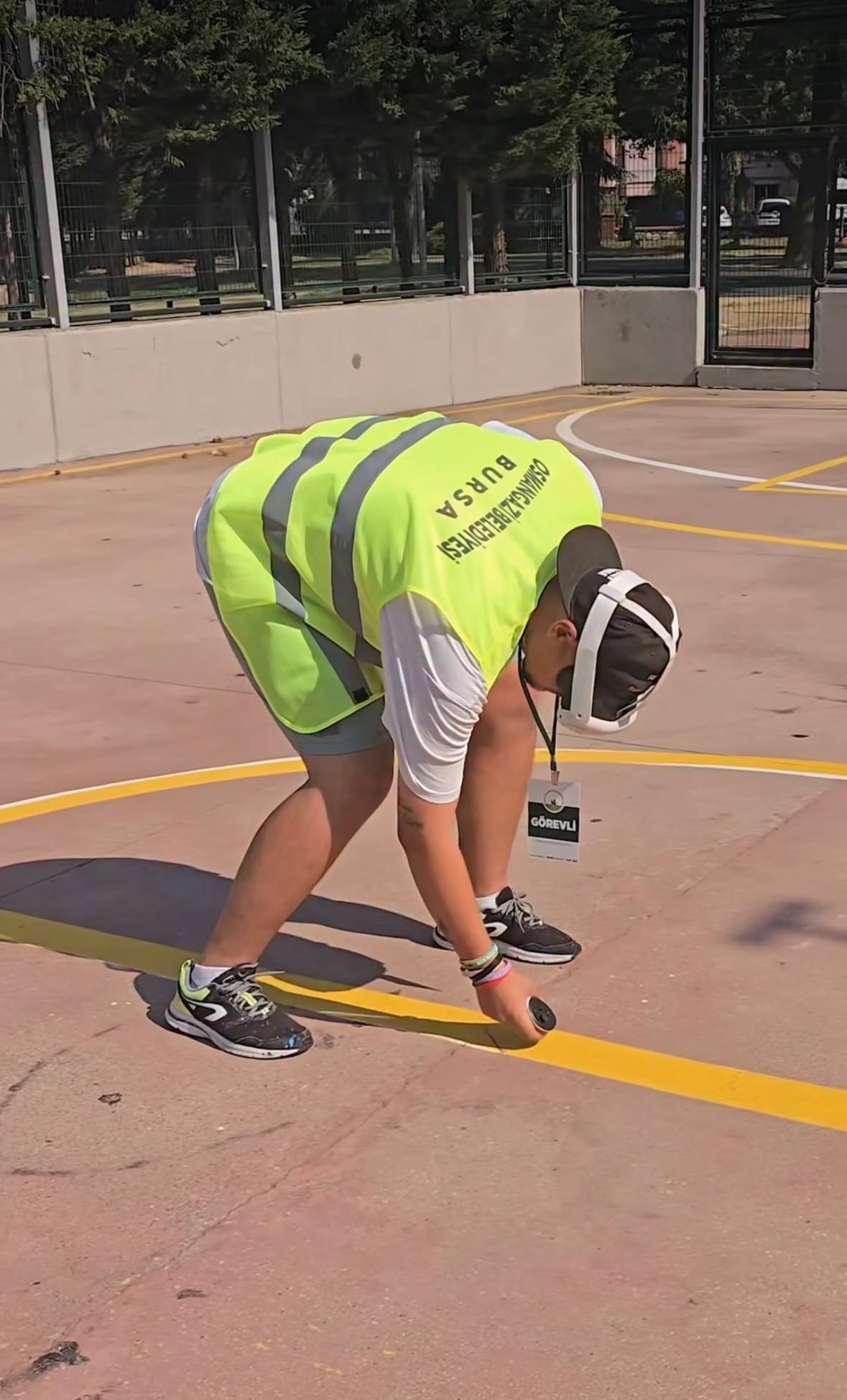
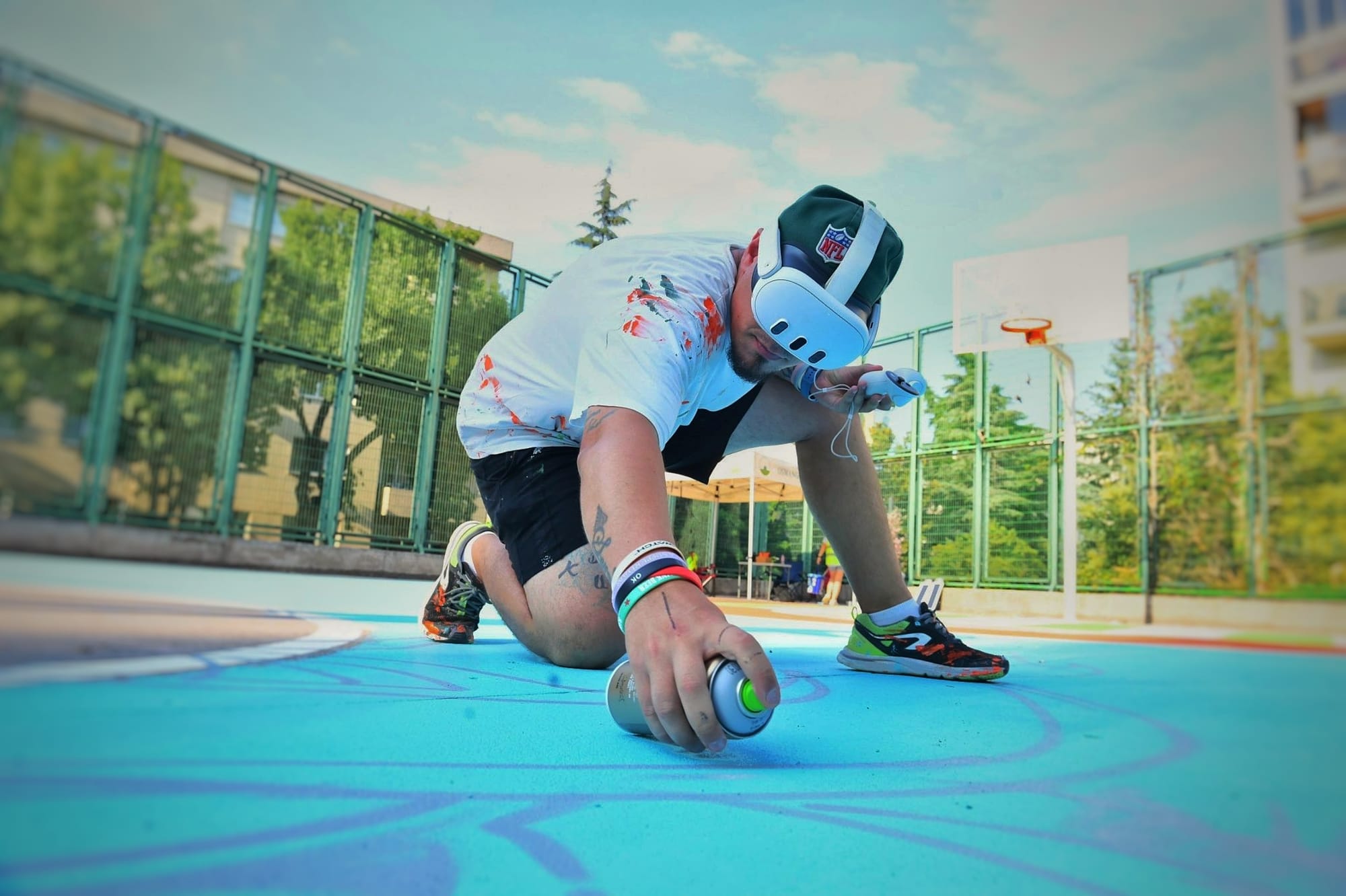
In the early days, I would accidentally press the controller buttons while bending down, so I removed the batteries to prevent unwanted inputs. Later, when the image-lock feature was added, that was the moment I said, “This is it.” Seeing the team solve exactly the problem I struggled with made the technology feel much more reliable.
Now there are no lighting issues, no projection costs, and drafting on giant surfaces has become a much more professional process.
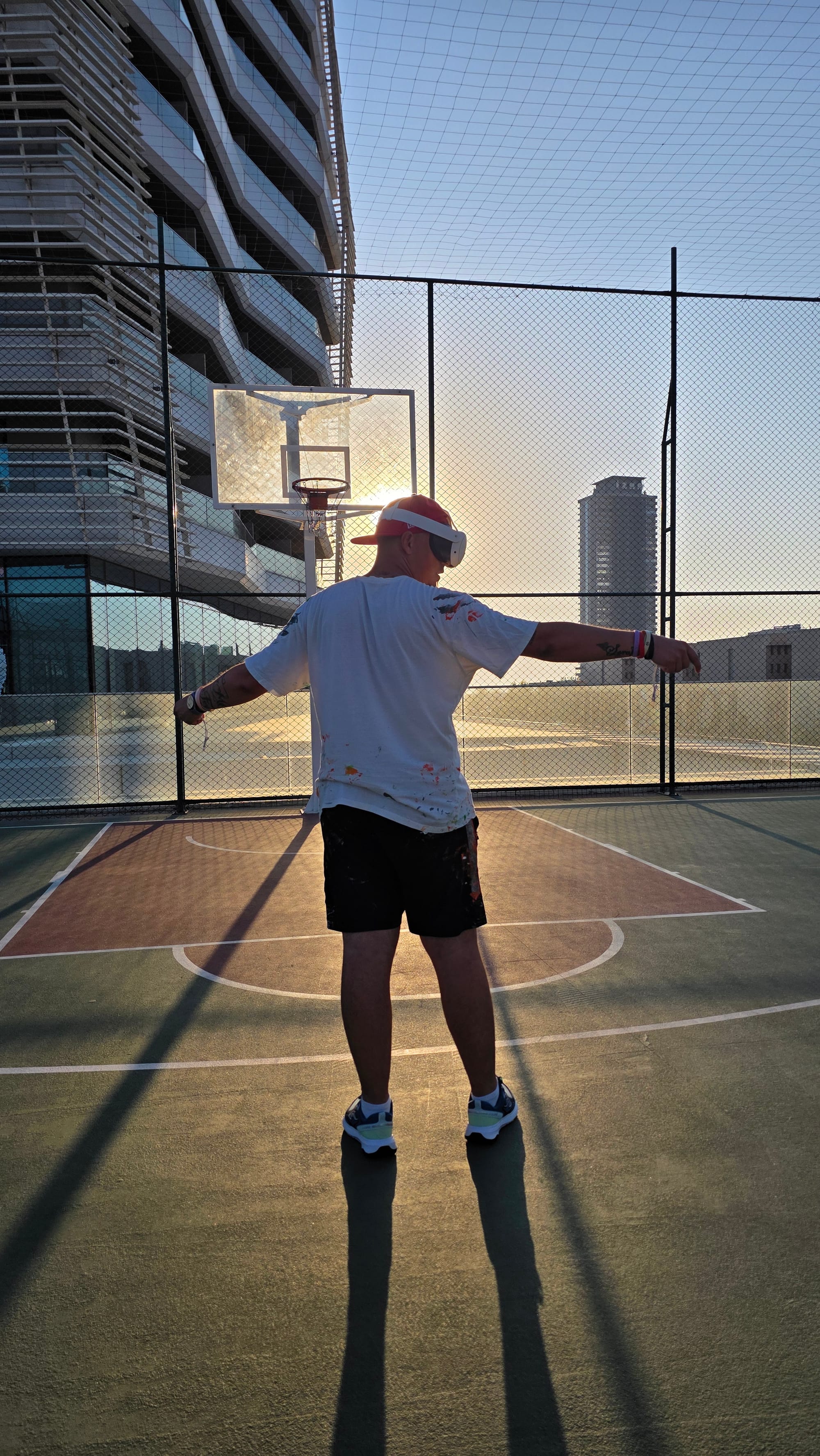
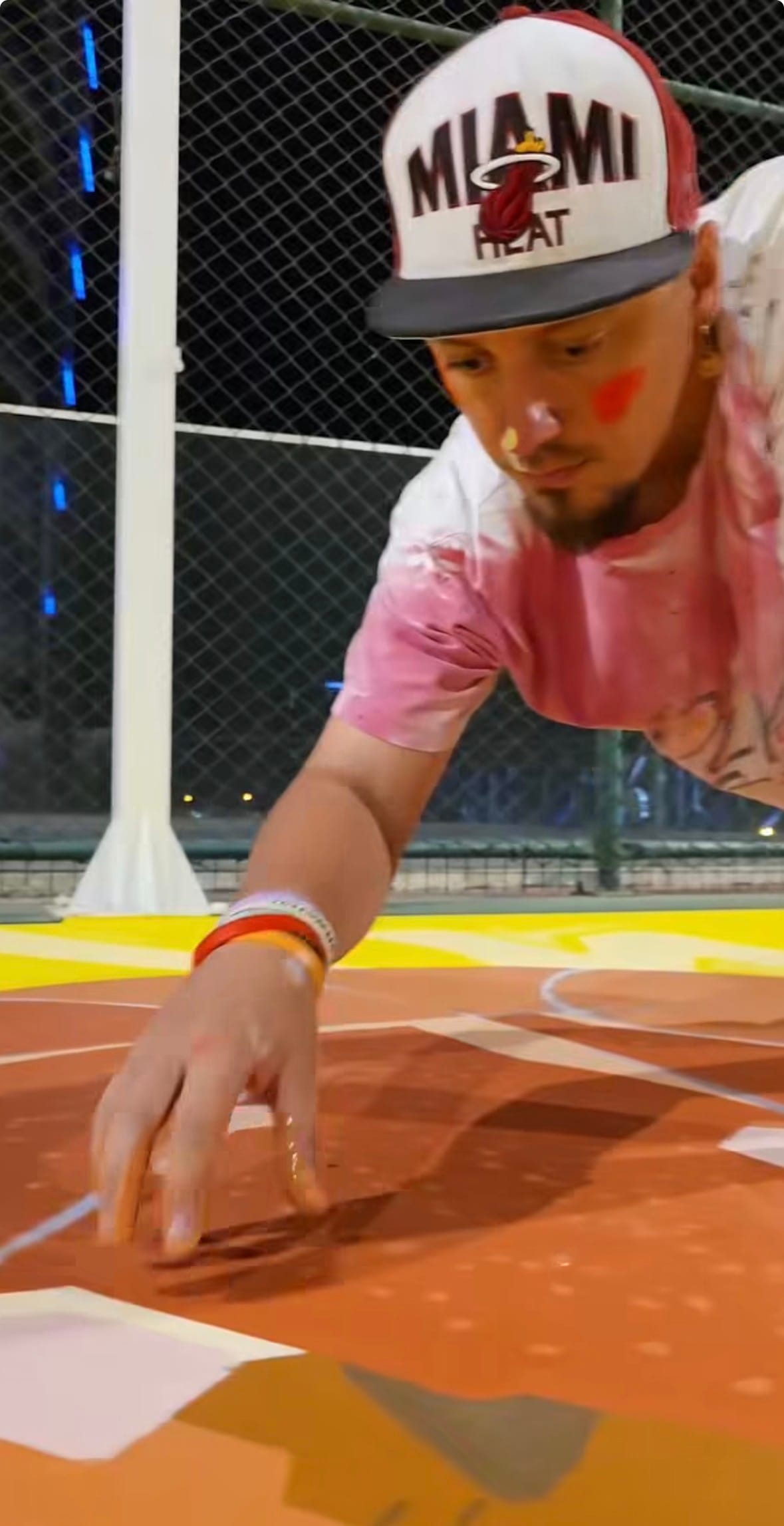
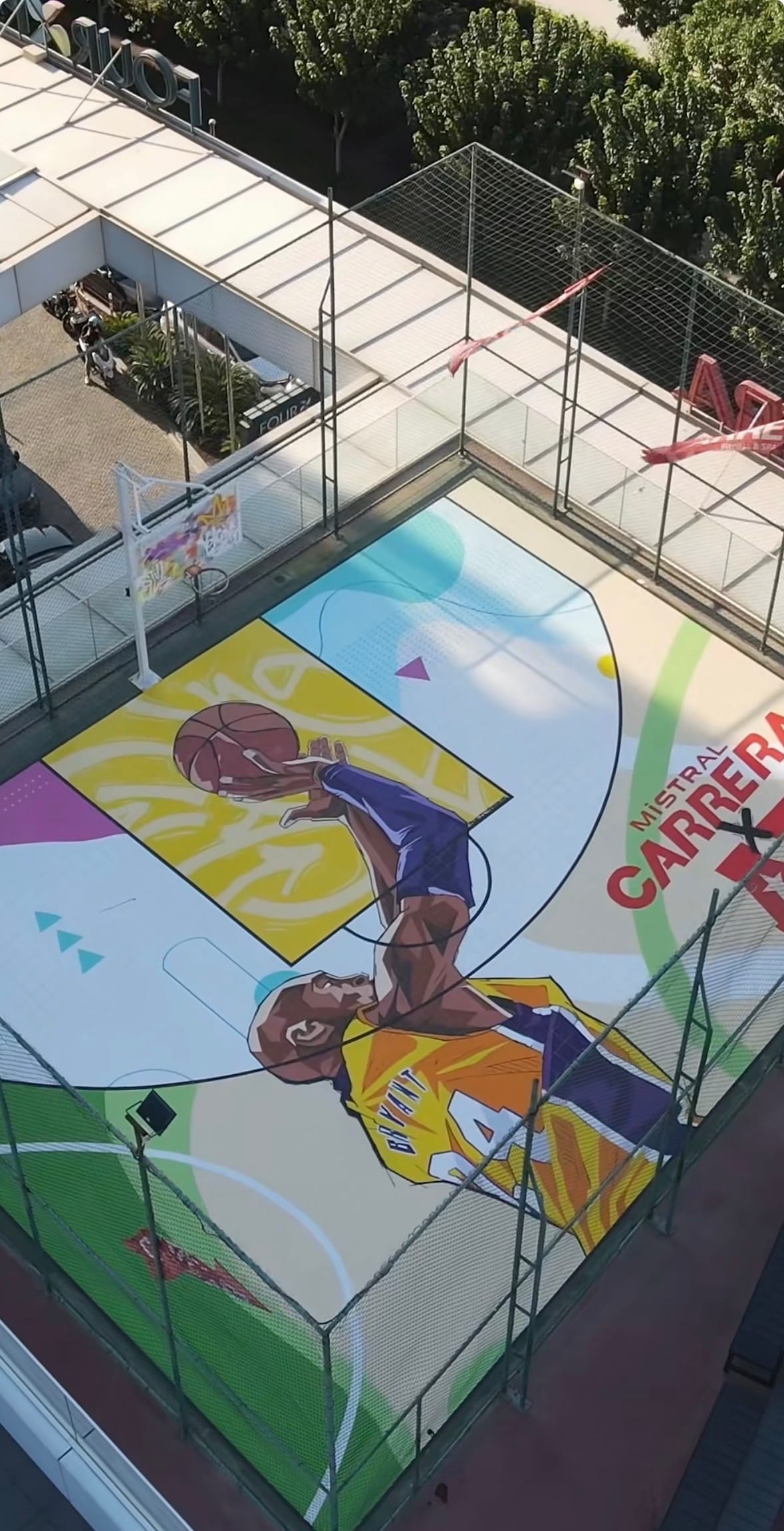
Video: Dukstill's Instagram
2. Walk us through your creative process when painting a basketball court. At which moments does Sketchar help you plan, position, or scale your artwork more efficiently?
Dukstill: Painting a basketball court feels like solving a huge puzzle — colors, forms, and composition must work from every angle. This is where Sketchar completely transforms my workflow.
I start by placing the court inside VR and can see the scale, angle, and placement of the draft in real dimensions. Even before painting, I experience the entire composition as if it were already complete.
This speeds up the process dramatically and reduces the margin of error to almost zero. Tasks like scaling, which used to take hours, now take just minutes — allowing me to spend more time on the creative side.
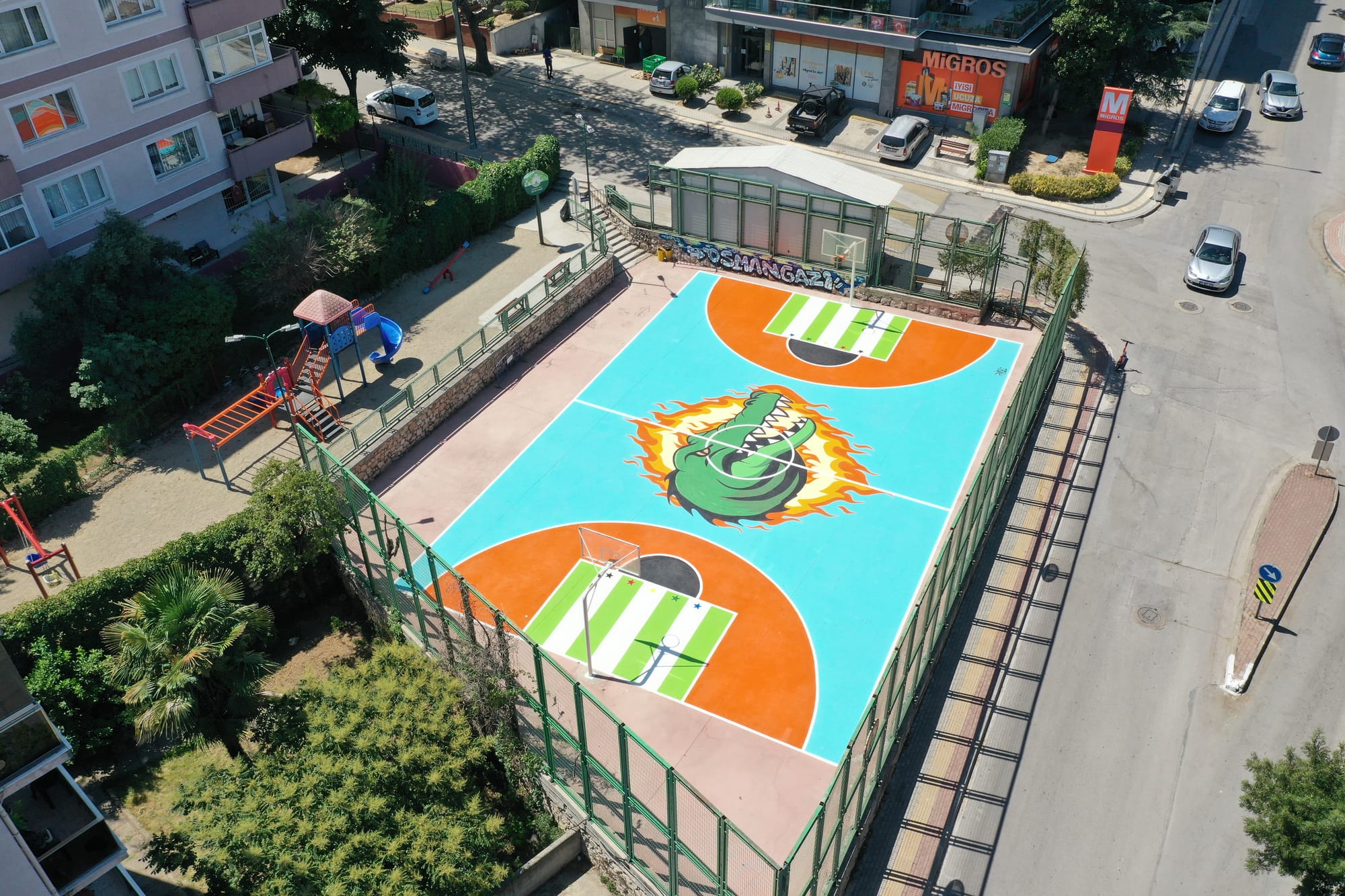
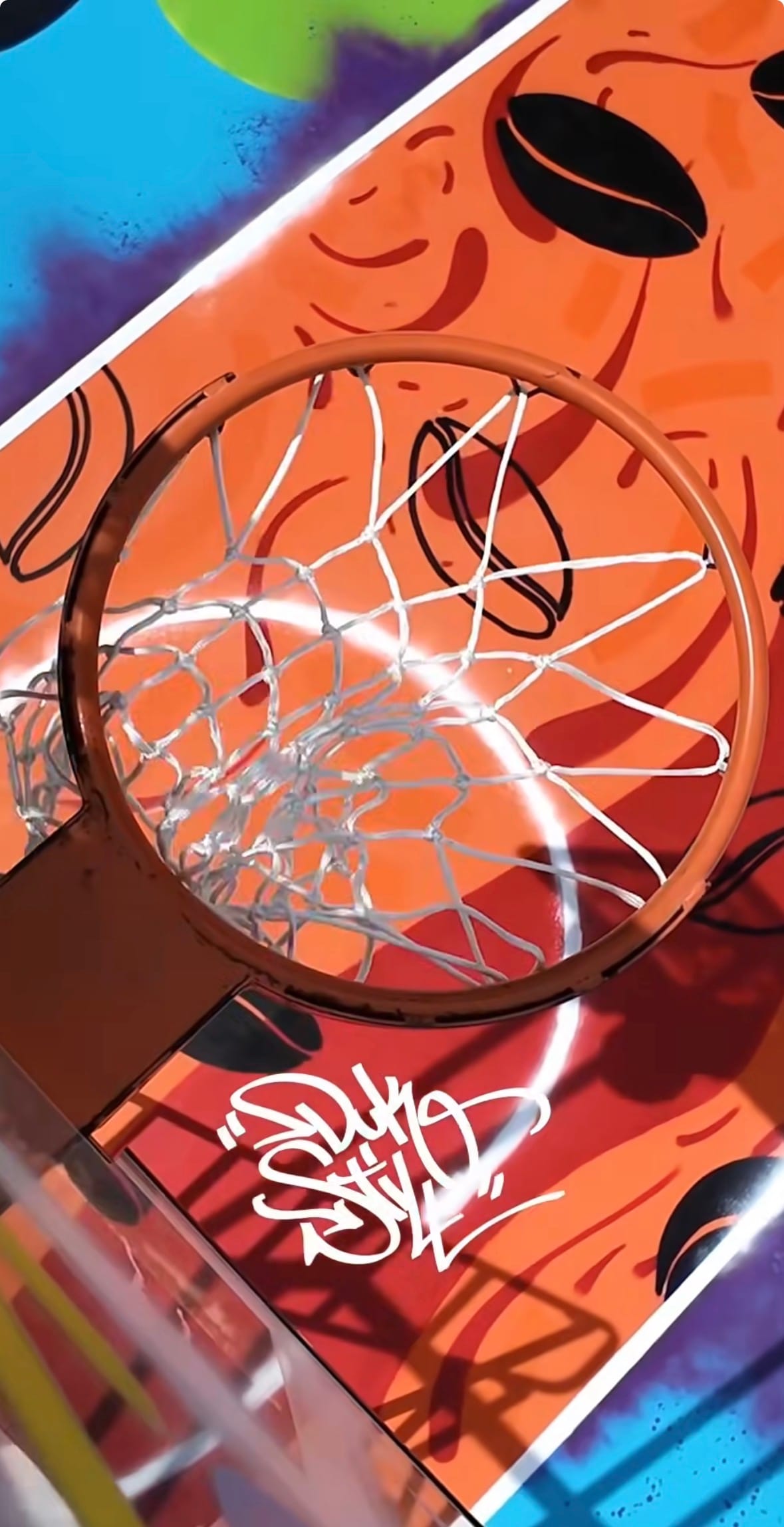
3. Ground murals often suffer from perspective distortion and alignment issues. How you maintain correct proportions when people view the artwork from multiple angles or higher elevations?
Dukstill: Perspective distortion is the biggest challenge in ground murals. People view the artwork from every direction — from the side, the front, from above, and through drones. So it has to look correct from all angles.
Sketchar becomes like an extra pair of “eyes” for me. I can preview and adjust the design from different heights and angles directly within the real space.
This ensures proportions stay accurate, symmetry remains intact, and the details fall into the right place. Thanks to VR, the process becomes faster and significantly more precise.
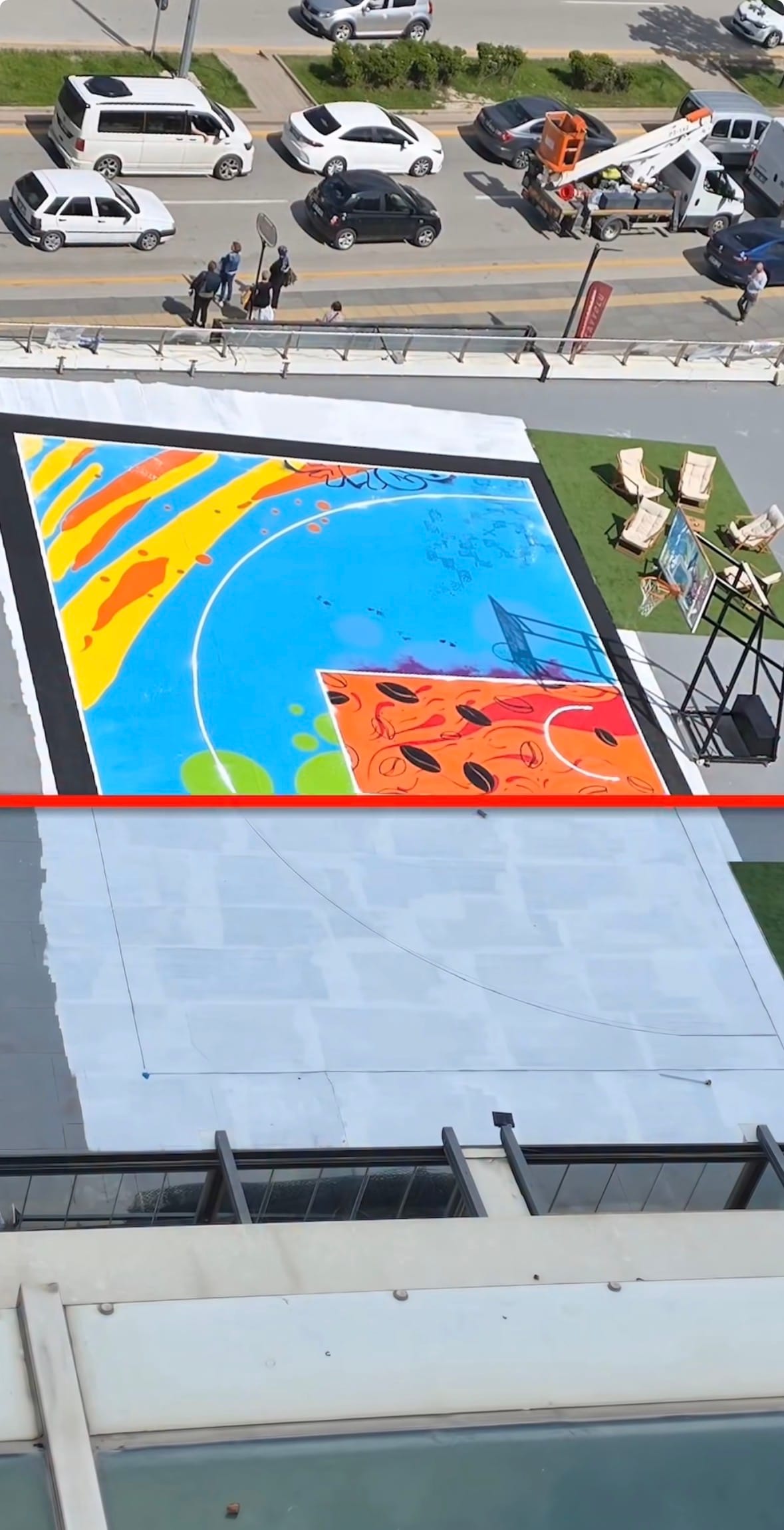
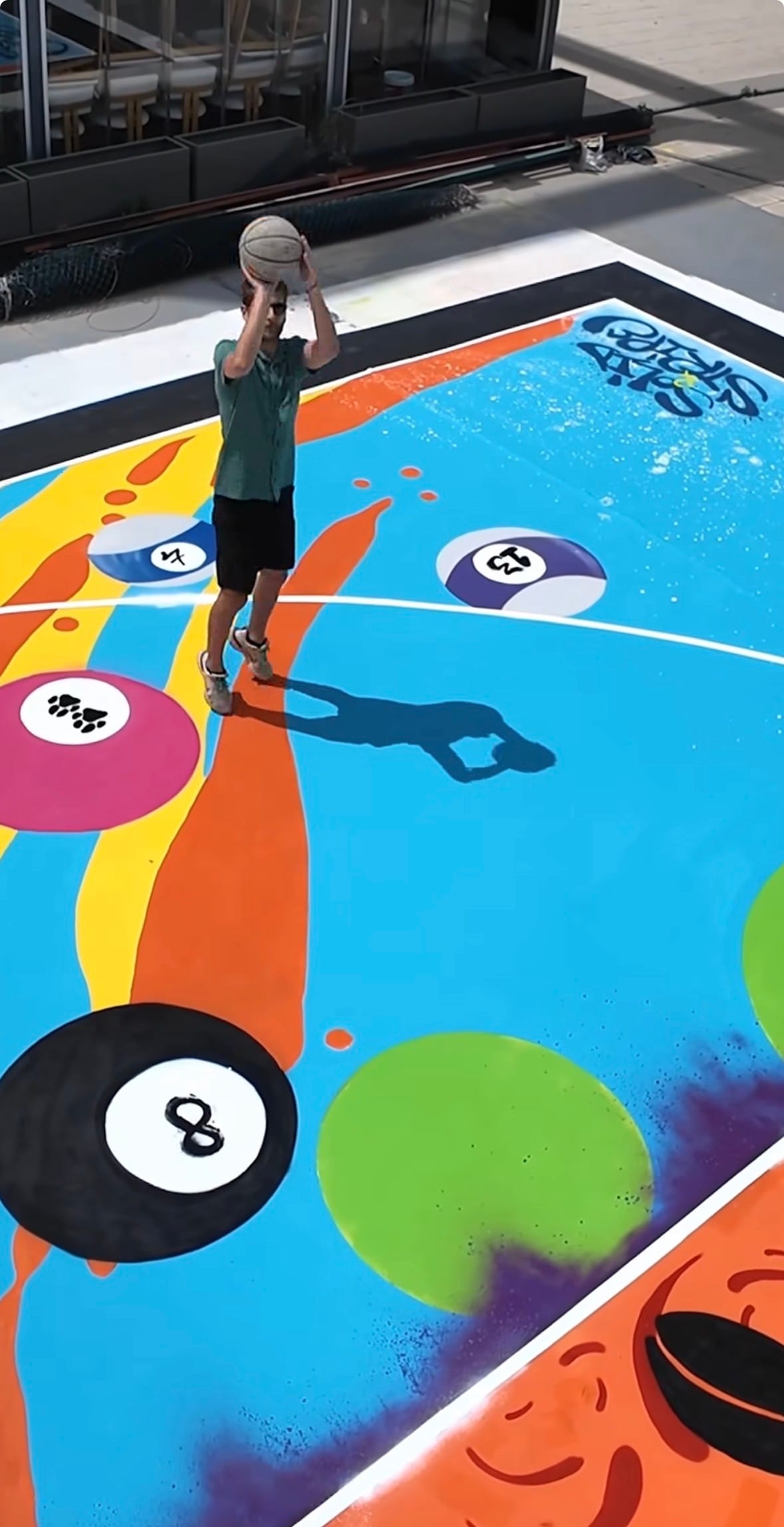
Video: Dukstill's Instagram
4. You’re one of the first mural artists in Turkey to adopt Sketchar for large-scale ground paintings. What advice would you give to artists who want to paint huge surfaces but feel overwhelmed by the scale?
Dukstill: My first advice to anyone starting large-scale murals is: don’t be afraid of the size. A huge surface can feel overwhelming, but the right tools make everything much more manageable.
Apps like Sketchar make the workflow clearer and more controlled. Scaling and aligning tens of meters with just your eyes is extremely difficult, but AR/VR gives you a virtual guide.
Using technology doesn’t lessen the artistic side of the work — on the contrary, it builds your confidence and leaves more room for creativity.
5. Based on your experience transforming basketball courts with AR/VR, how do you see technology shaping the future of large-scale public art — especially on unconventional surfaces like floors, streets, and sports fields?
Dukstill: I believe AR/VR will become a standard part of large-scale public art. On surfaces like courts, streets, and sports fields — where traditional methods are difficult — technology is becoming a necessity.
Soon, artists will design murals in VR before painting, brands will review projects in virtual environments, and physical execution will take much less time.
Technology doesn’t replace the artist — it simply allows us to think bigger. That’s why I’m excited to be part of this transformation.
Ground murals were once defined by limitations: expensive setups, painstaking alignment, unpredictable distortion, and workflow bottlenecks that slowed even the most experienced artists to a crawl. Dukstill’s process shows how AR/VR is rapidly dismantling those barriers.
By bringing real-world scale into a digital workflow, Sketchar allows artists to preview, position, scale, and adjust their designs before a single drop of paint hits the ground. For large surfaces — courts, streets, plazas, runways — this shift is transformative. It cuts setup time, improves accuracy, reduces errors, and makes complex compositions far more achievable.
More importantly, it gives artists the freedom to think bigger.
AR and VR aren’t replacing craftsmanship; they’re amplifying it.
As Dukstill puts it, “Technology doesn’t lessen the artistic side of the work — it builds your confidence and leaves more room for creativity.” And that’s exactly why this new generation of tech-forward muralists is redefining the future of public art, one giant surface at a time.
▋
Download Sketchar on Meta Quest
Follow Dukstill on Instagram
Get 20% OFF the Annual subscription for Sketchar on Meta Quest using this promo code: DUKSTILL-2D9889