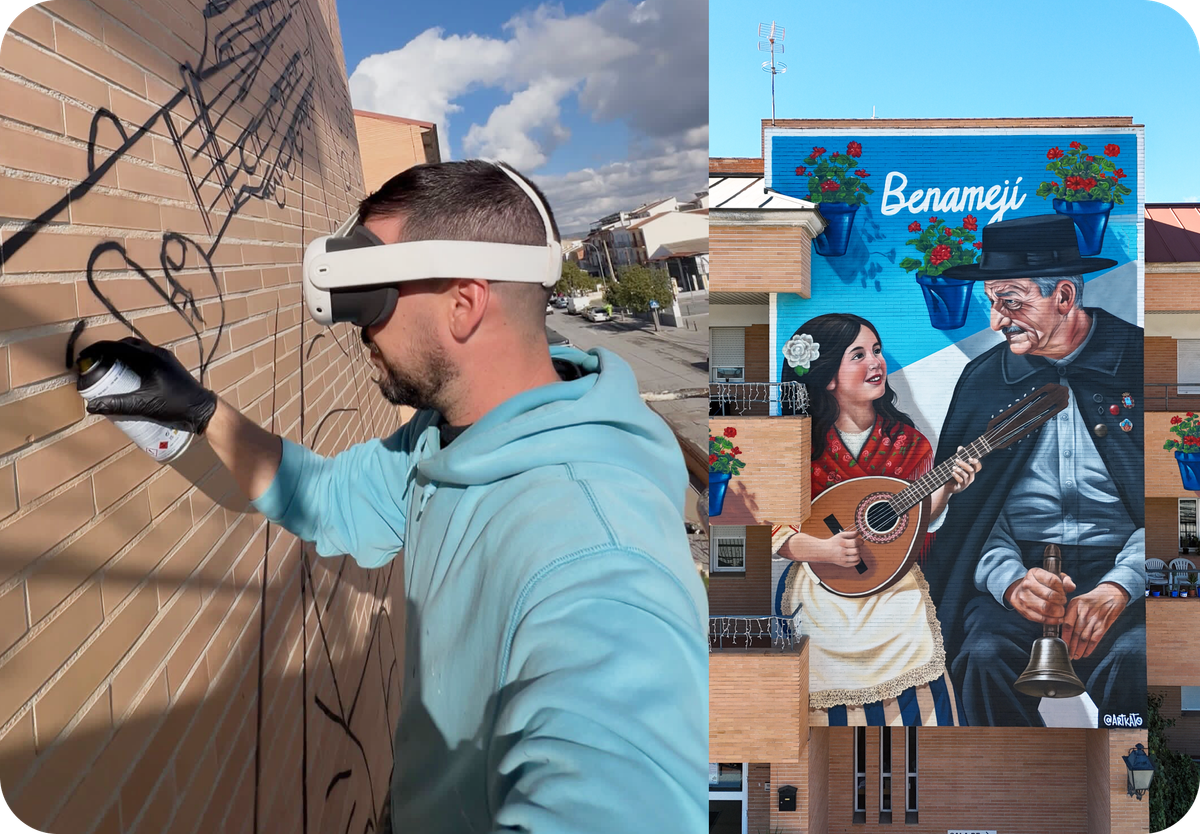
For mural artists who paint portraits and animals, sketching isn’t just a first step—it’s often the most time-consuming and mentally demanding part of the process. Getting proportions right, adjusting perspective from a crane, and constantly checking alignment can take hours before the real painting even begins.
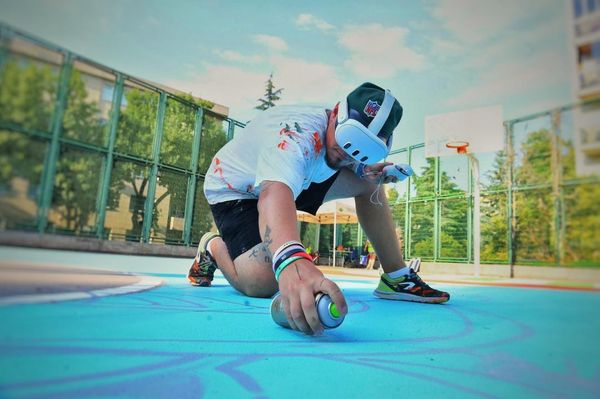
Seville-based mural artist Fabian Bravo Guerrero, known as Art Kato, has spent years working with traditional sketching methods like grids and doodle techniques. Recently, he introduced Sketchar and a VR headset into his workflow—not to replace artistic skill, but to remove friction from the sketching phase.
In this interview, Art Kato explains how VR transformed the way he approaches portrait murals, why speed and clarity matter more than novelty, and how reclaiming sketching time allows him to focus on what truly defines the artist: color, volume, and detail.
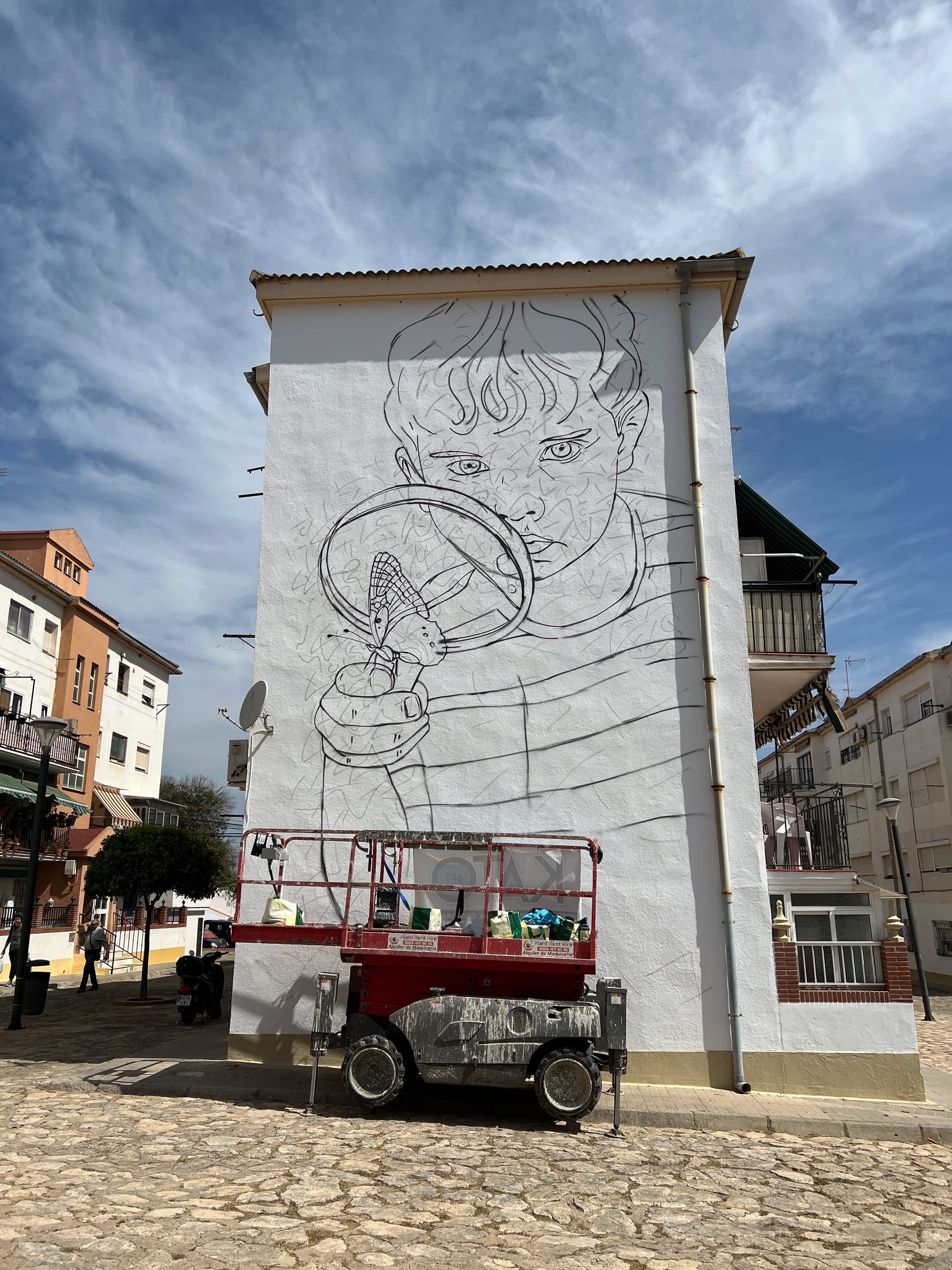
1. Your murals featuring children are incredibly expressive. Could you share your creative process before using Sketchar and how it changed after you started working with a VR headset?
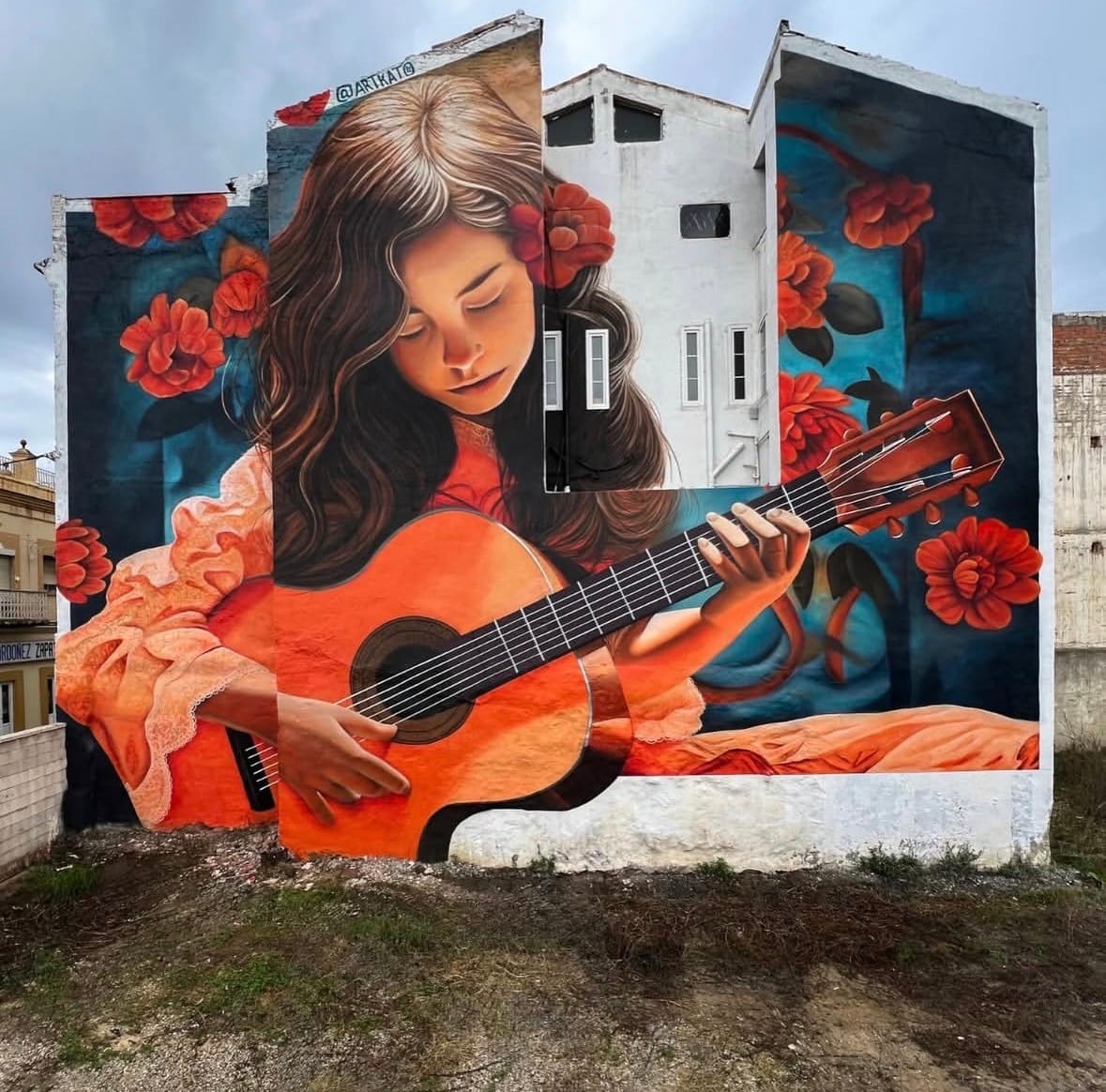
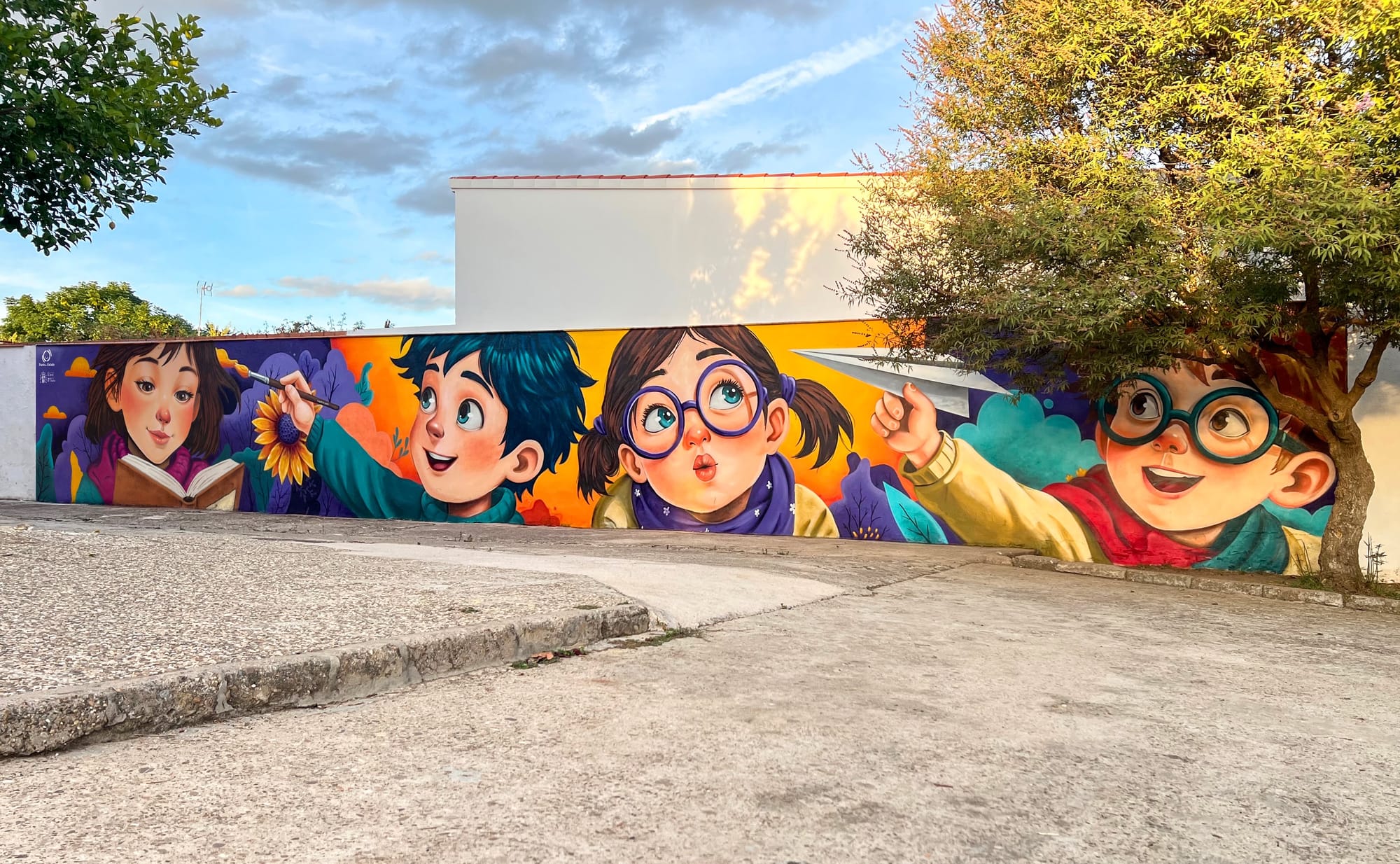
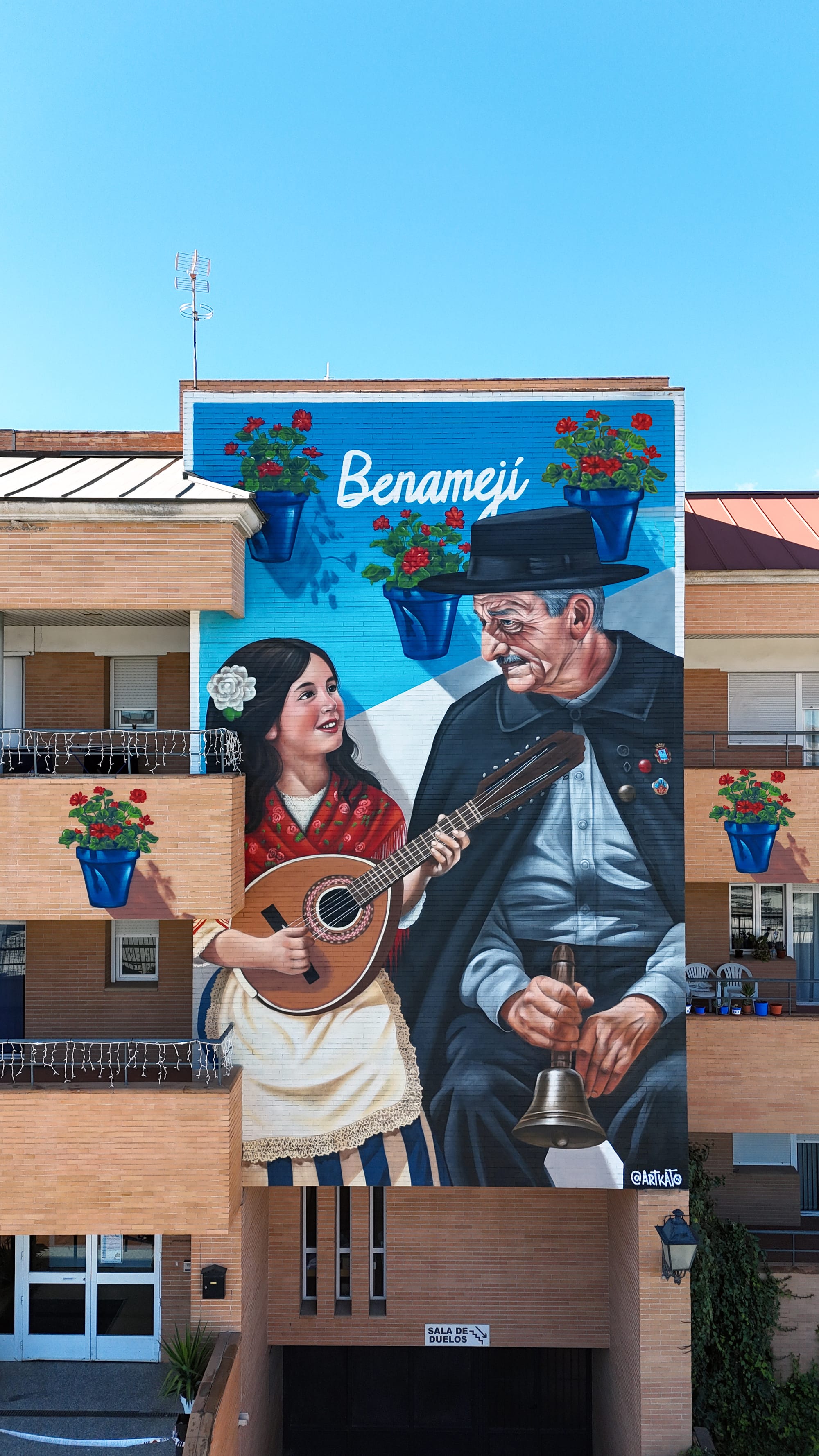
Art Kato: The four children’s murals I painted in Ronda were done using a technique called doodle. You create many doodles or random shapes that later serve as a guide. It’s a somewhat faster process than using a grid, and it’s more adjustable because you can later modify the size and placement with an application.
However, it becomes tedious when you have to erase the doodles and try to find the actual drawing line among so many scribbles.
2. Portraits are one of the most challenging subjects in mural art, especially in terms of proportions and facial accuracy. How do Sketchar and VR help you with these challenges?
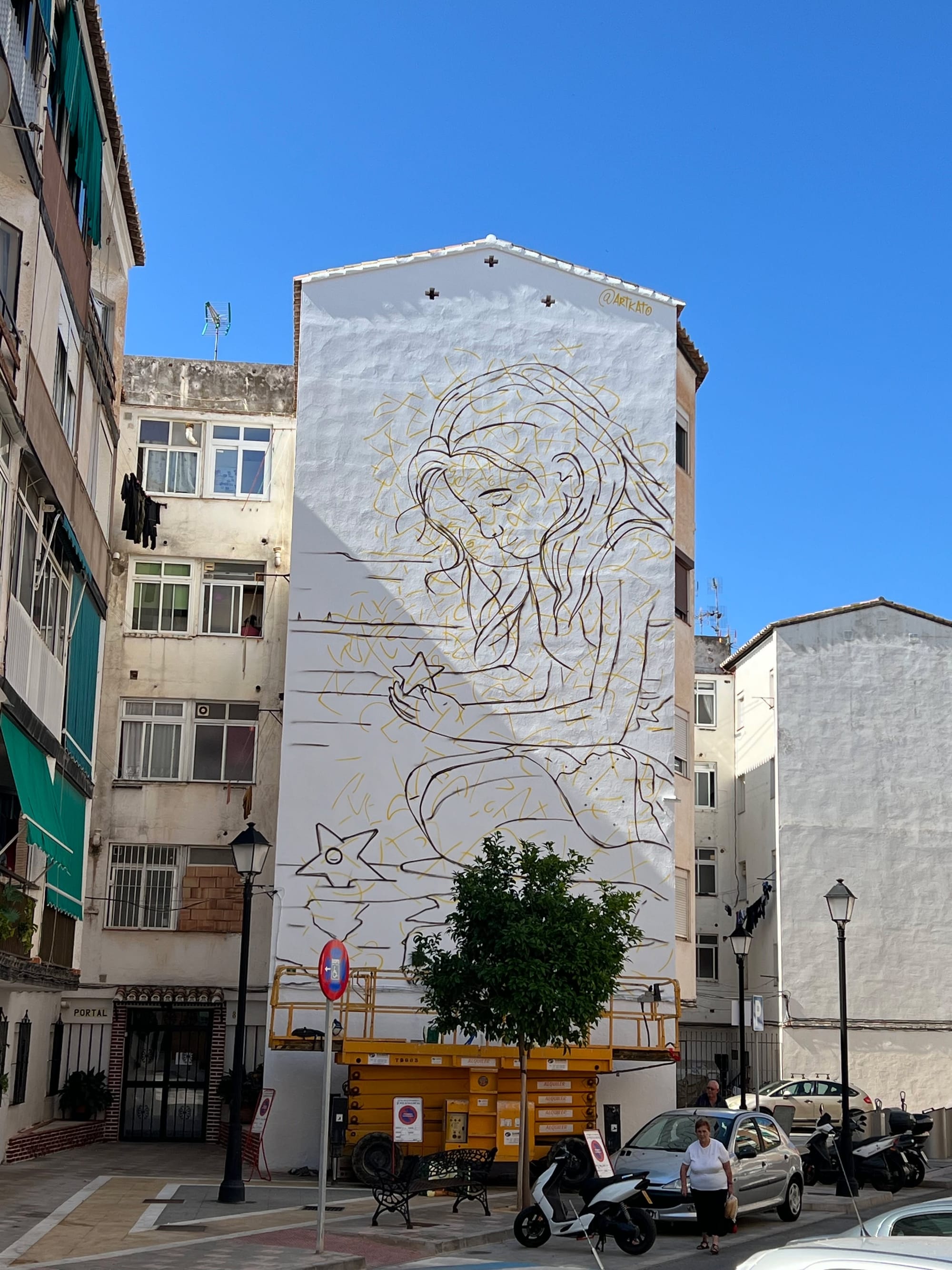
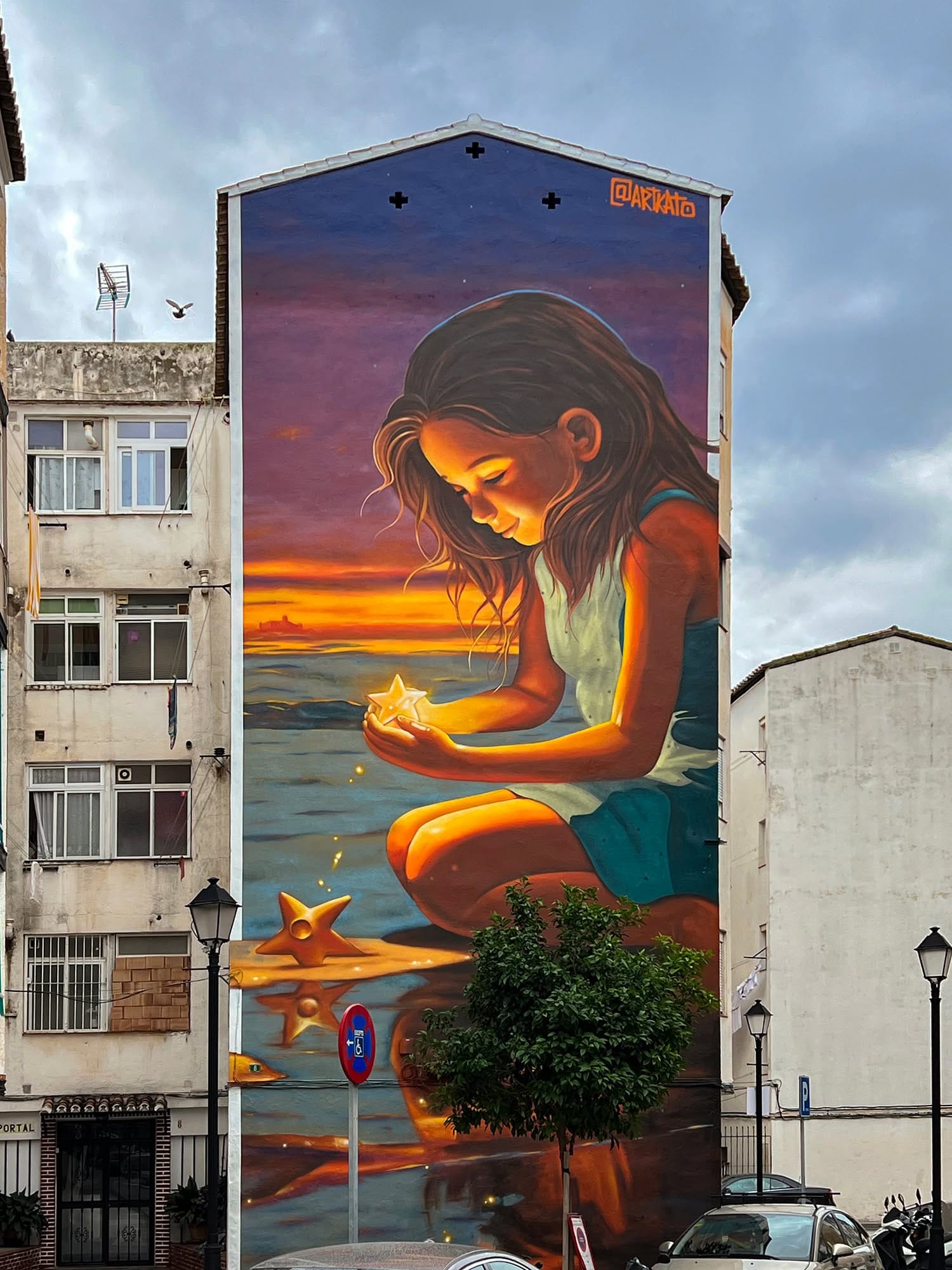
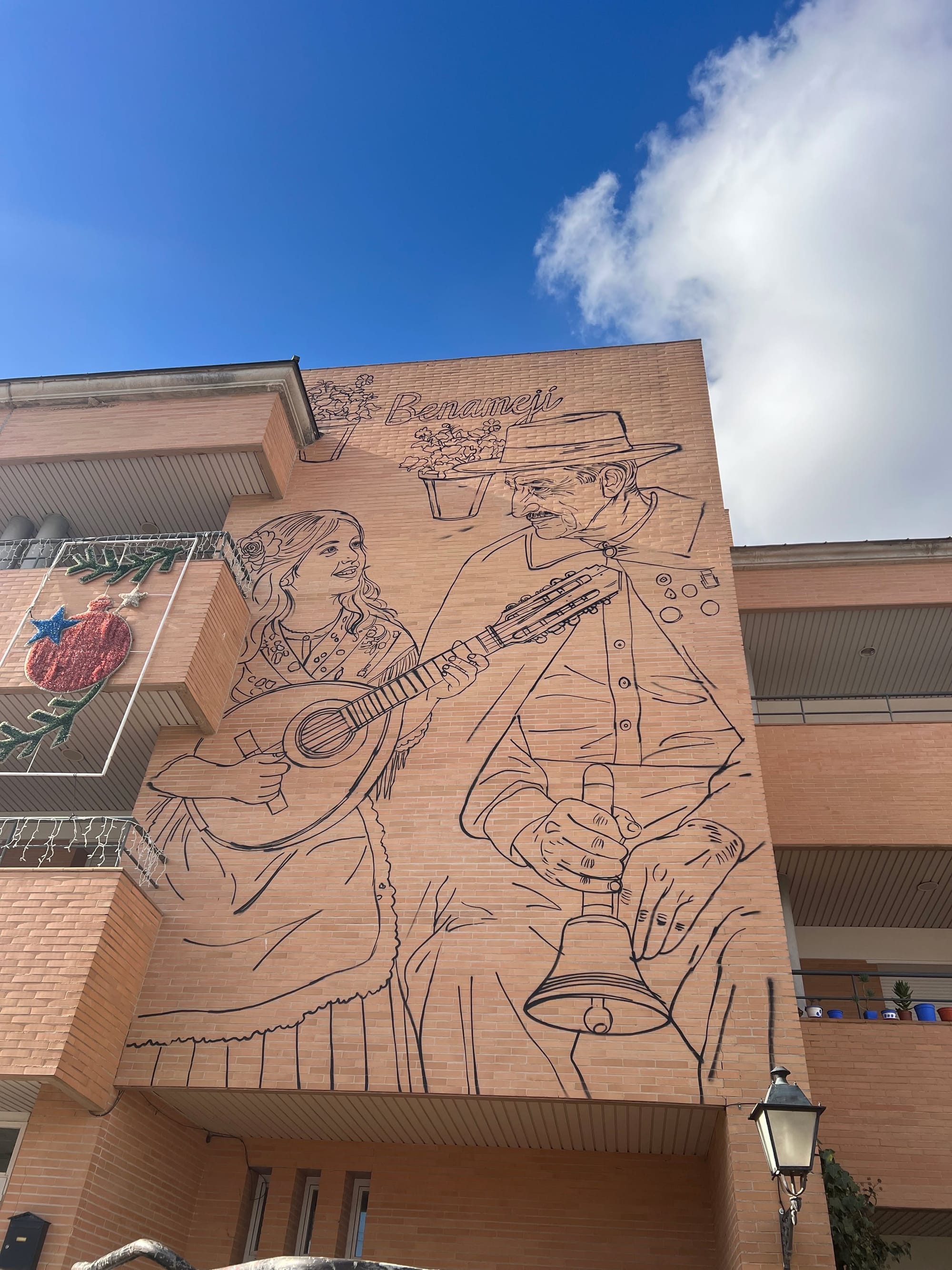
Art Kato: They help me a lot when it comes to creating a quick sketch. The wall is marked only with the sketch itself, so I don’t have to erase guide marks, grids, or other reference lines afterward.
The mural with kids took me 45 minutes to sketch. It measures 18 × 3 meters, and using the doodle technique would have taken at least 4–6 hours.
3. As an artist, what is the most fascinating or surprising aspect of using technology like VR in your mural work?
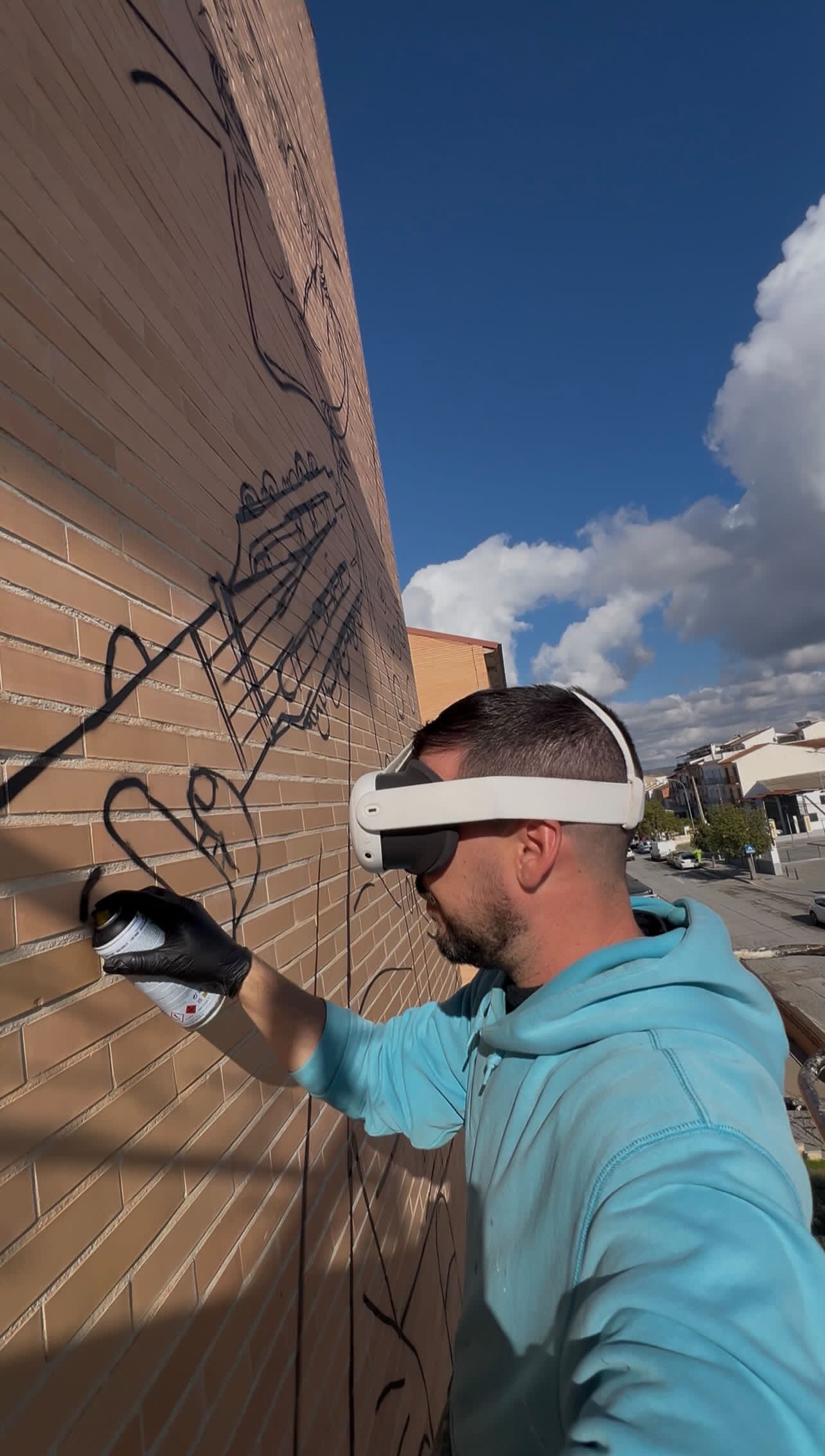
Art Kato: The speed. I’ve spent anywhere from 6 to 12 hours just fitting a sketch onto a large mural. You have to think about placement, crane movement, perspective, and constantly check whether everything is correct.
With the VR headset, you simply start painting without worrying about whether you’ve made a mistake in the sketch.
4. Many mural artists worry that technology might interfere with their artistic intuition. How do you balance traditional skills with VR tools in your workflow?
Art Kato: I always say that with this technology, almost anyone can sketch. But let’s not fool ourselves—when it comes to adding color, volume, and creating a strong design, that’s where the true artist comes in.
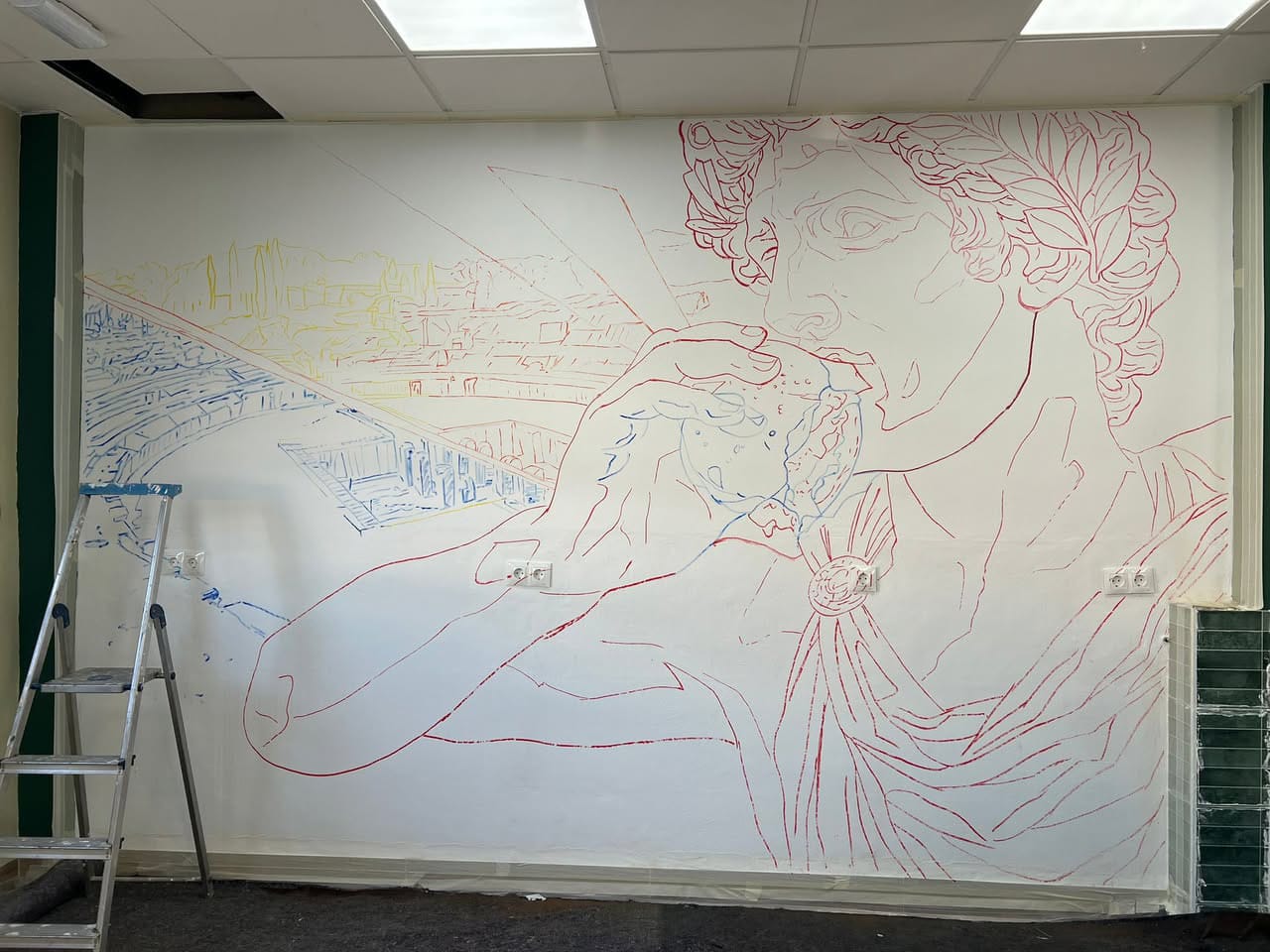
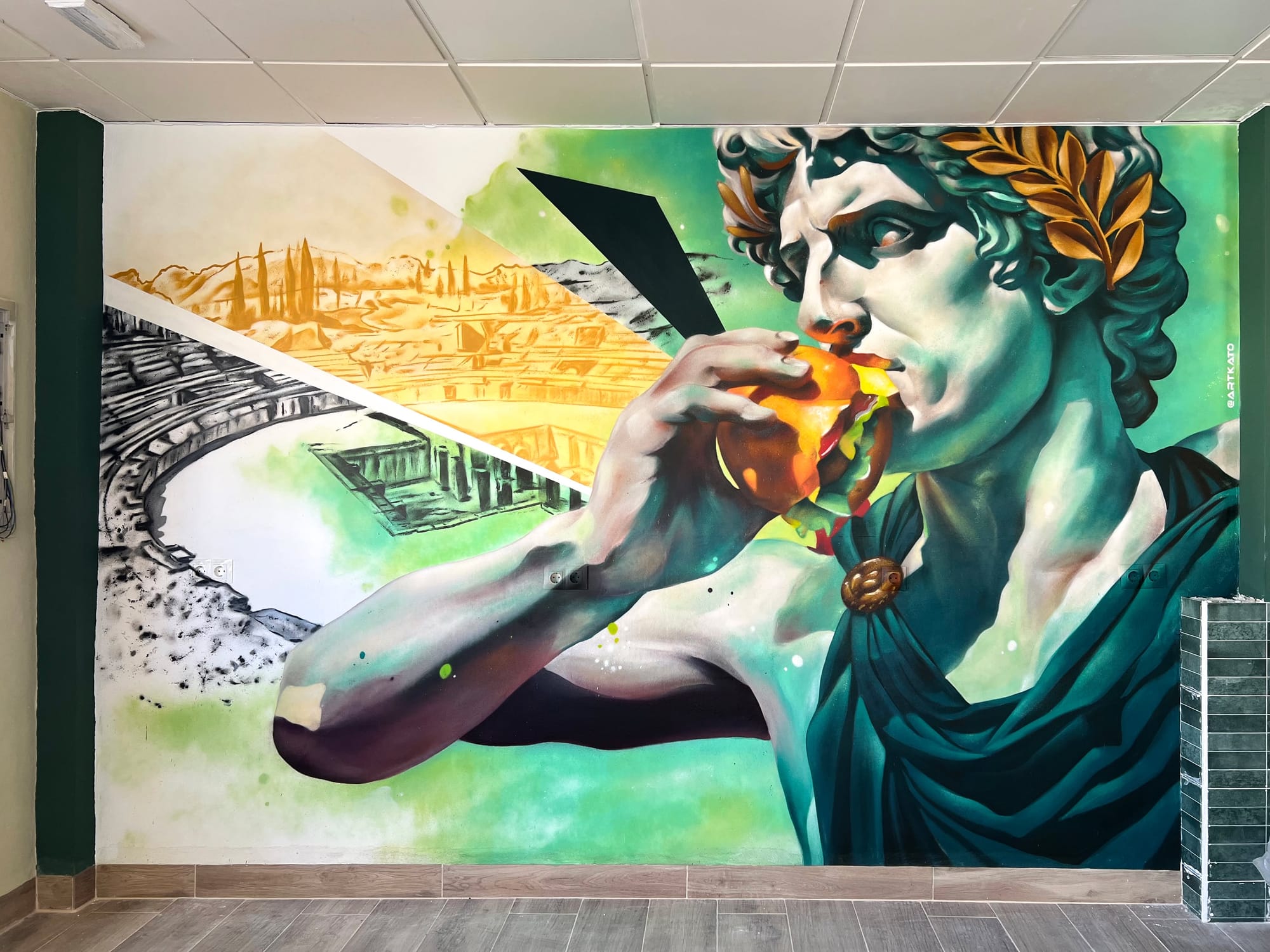
This was the first sketch that Kato created using the Sketchar app with a VR headset (October 2, 2025).
5. From one artist to another, what is the most important thing you would say to muralists who have never tried VR and may feel hesitant or afraid of it?
Art Kato: For me, it’s more about speed and clarity than anything else. VR allows you to use the time you would normally spend sketching for actual painting work.
The hours saved during the sketching phase can later be used to improve details and refinements. If you enjoy improvising while sketching, then it’s a different story—but for controlled, precise work, it’s a big advantage.
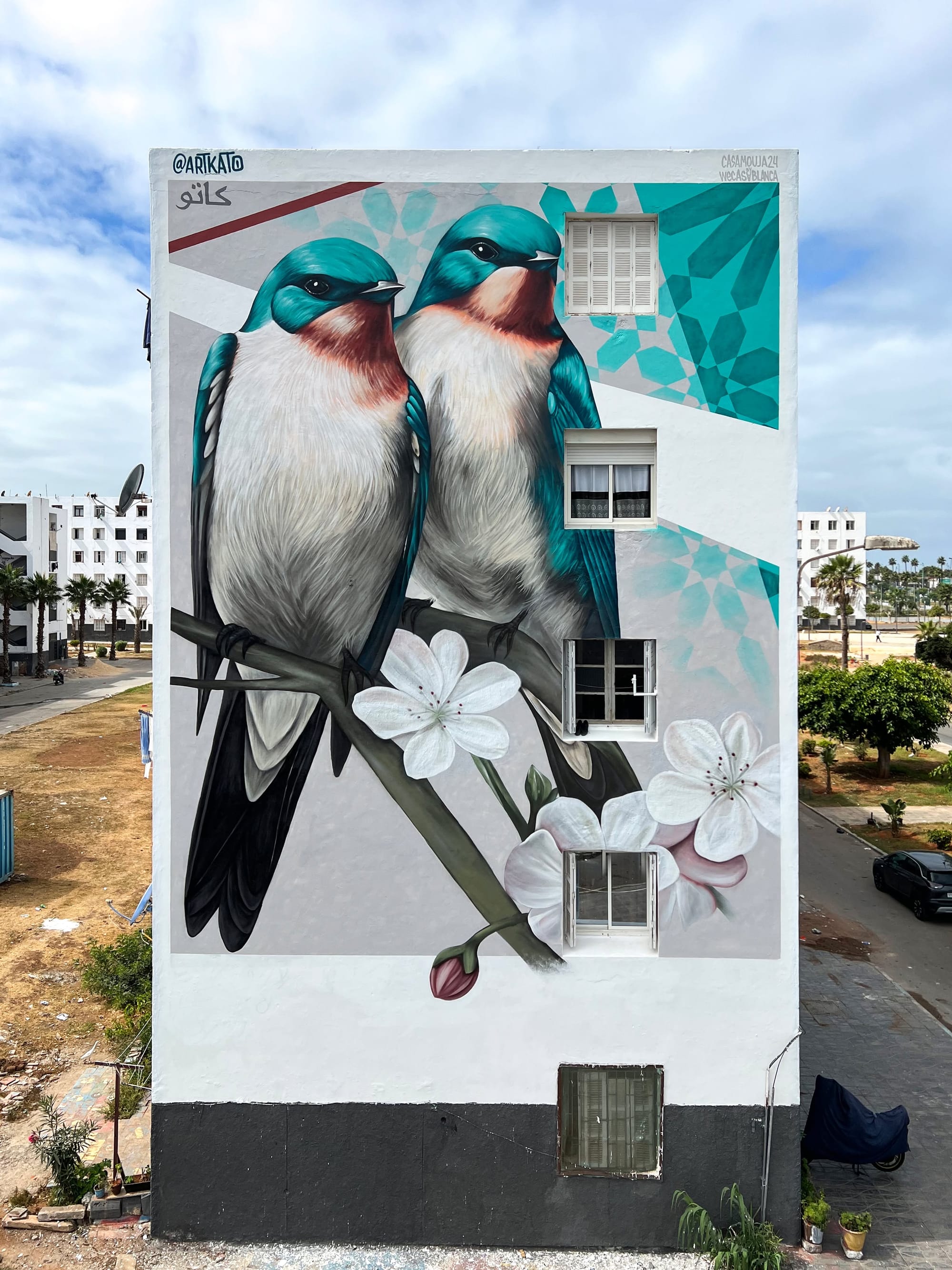
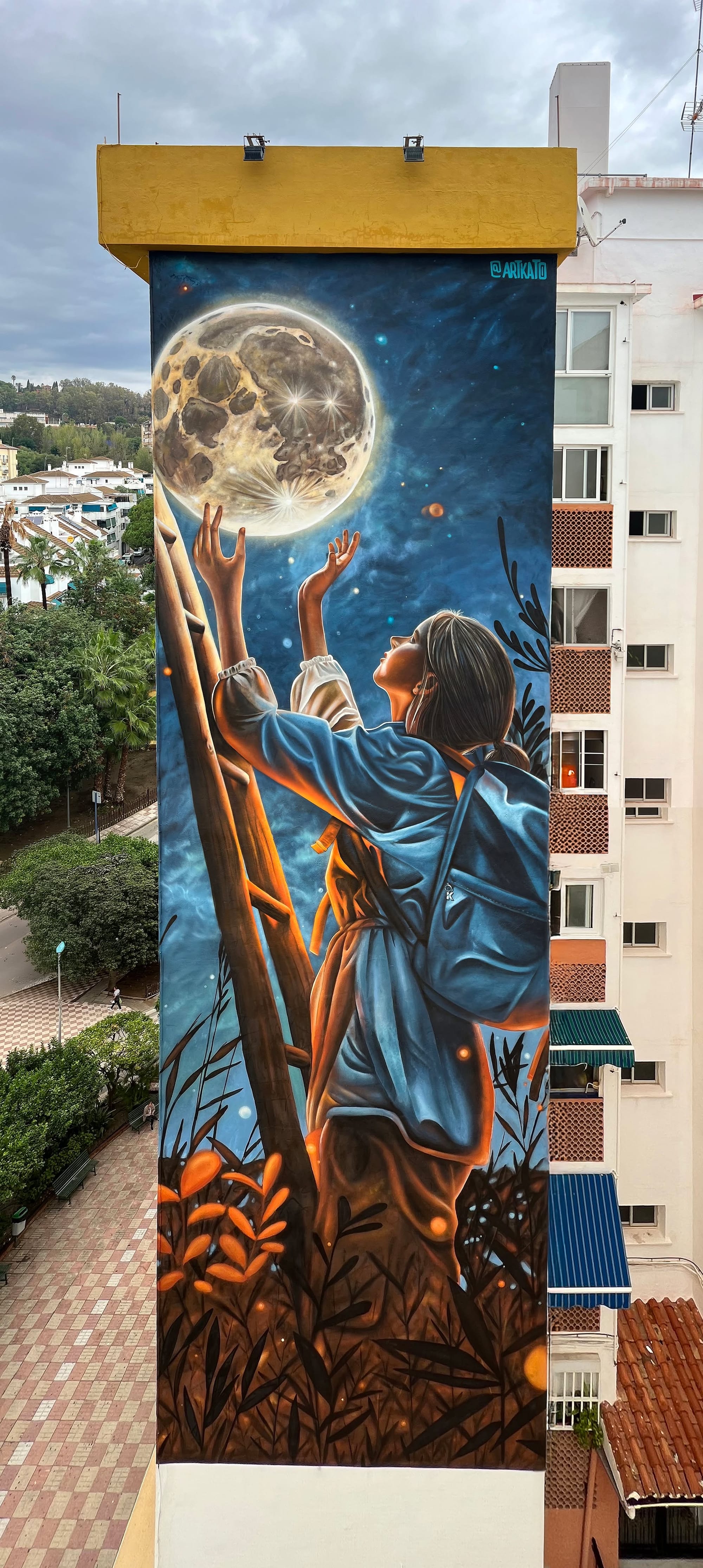
What stands out in Art Kato’s experience isn’t just faster sketching—it’s the shift in mindset. With VR, the uncertainty that once dominated the early stages of a mural is largely removed. Instead of spending 6 to 12 hours adjusting proportions, erasing guides, and second-guessing placement, he can move directly into painting with confidence.
Importantly, VR doesn’t erase the role of the artist. As Art Kato points out, anyone can place a sketch—but understanding color, depth, composition, and emotion still defines true craftsmanship. Tools like Sketchar don’t replace intuition; they protect it by clearing away technical noise.
For portrait muralists who value precision, speed, and focus, VR isn’t about changing how you paint—it’s about giving you back the time to paint better.
▋
Learn more about Sketchar
Subscribe Fabian Art Kato on Instagram